Is High-Waisted Activewear Better for Yoga?

Table of Contents
- Is High-Waisted Activewear Better for Yoga? The Honest Answer
- High-Waisted vs. Mid-Rise Leggings: What Actually Changes in a Yoga Class
- Leggings That Stay Up During Yoga: Waistband Construction and Secure Fit
- Yoga Leggings Waistband Rolling: Why It Happens and How to Stop It
- Yoga Clothes for Bending and Stretching: Flexibility and Range of Motion
- Fabric, Heat, and Sweat: What Breathability and Opacity Mean in Practice
- Fit Across Body Types: Rise, Compression, and Individual Trade-Offs
- Conclusion: When High-Waisted Activewear Earns Its Place in Your Yoga Bag
- Frequently Asked Questions
Last Updated: October 5, 2026
Is High-Waisted Activewear Better for Yoga? The Honest Answer
High-waisted activewear is better for yoga in most cases, but not for the reason the marketing suggests. The waistband height itself is not the advantage. What changes is how the fabric sits against your midsection when you fold, twist, and invert.
Below, we break down what actually changes in a class, where mid-rise still works, and how to tell the difference before you buy.
High-Waisted vs. Mid-Rise Leggings: What Actually Changes in a Yoga Class
High-waisted vs. mid-rise leggings differ mainly in where the waistband sits and how much of your midsection it covers. A high-rise band typically lands at or above the navel.
Here is a pose-by-pose breakdown of how high, mid, and low rises tend to perform. This is the level of detail most comparisons skip, and it is where the honest answer lives.
Inversions (Downward Dog, Handstand, Shoulder Stand)
Gravity pulls any waistband toward your ribs. In downward dog, a high-rise band stays anchored at the natural waist and keeps your lower back covered. A mid-rise band often shifts down, exposing the lower back.
But high-rise is not automatically better. If the band is too loose, it will slide down in inversions just like a lower rise. If it is too tight, it digs into your stomach in shoulder stand.
Deep Twists (Triangle, Revolved Chair, Seated Twist)
Twisting pulls the waistband diagonally. A high-rise band distributes that pull across more fabric, so it stays in place. A mid-rise band can twist with you, creating a diagonal fold that digs into your side.
However, a high band that is too stiff can restrict your twist. You want fabric that moves with your rotation, not against it. Four-way stretch helps here, it follows the twist instead of fighting it.
Forward Folds (Standing Forward Fold, Seated Forward Fold, Wide-Legged Fold)
In a deep forward fold, a high-rise band keeps your lower back and midsection covered without tugging. A mid-rise band often exposes a strip of skin at the back. A low-rise band will gap at the waist.
The trade-off: a high band that is too tight creates pressure across the stomach in seated folds. A band that is too loose slides down. Fit matters more than rise.
Floor Poses (Savasana, Supine Twist, Bridge, Happy Baby)
On the floor, the waistband rests against the mat. A high-rise band can bunch or roll if it is too wide or stiff, especially in supine twists. A mid-rise band may feel more comfortable because it sits lower and does not press into the ribs.
For restorative or gentle yoga, mid-rise often wins because there is less fabric to manage. For dynamic vinyasa, high-rise usually wins because it stays put.
Where Mid-Rise Still Works
Mid-rise is not obsolete. If you have a shorter torso, a high-rise band can ride up toward your ribs in seated poses. If you run hot, less fabric across the midsection feels cooler. And if you mostly practice restorative or gentle yoga, the coverage demands are lower.
For anyone doing dynamic vinyasa, hot yoga, or inversions, the coverage advantage of a higher rise usually outweighs the comfort trade-off.
Leggings That Stay Up During Yoga: Waistband Construction and Secure Fit
Leggings that stay up during yoga rely on three things: band width, elastic recovery, and how the band is attached to the body of the legging. Rise alone does not keep a waistband in place.
Look for these construction details:
- Band width: A wider band spreads tension across more surface area and resists folding.
- Elastic recovery: Fabric that springs back to shape holds position better than fabric that stretches out.
- Seam placement: A seam-free or flat-locked waistband reduces the ridge that catches and rolls.
Our Women's Seamless High Waist Quick-Dry Sports Yoga Pants use a seamless knitted construction with a high-waist compression band designed to stay flat without rolling during dynamic movement.

Yoga Leggings Waistband Rolling: Why It Happens and How to Stop It
Yoga leggings waistband rolling happens when the band cannot hold its shape against movement. The usual causes are a band that is too narrow, fabric with poor elastic recovery, or a size that sits slightly loose at the waist.
Here is how to stop it:
Women's Seamless High Waist Quick-Dry Sports Yoga Pants →
- Size for the waist, not the hip. If the band gapes at the back, size down or choose a style with a compression fit.
- Choose a wider band. Narrow elastic rolls more easily under tension.
- Avoid cotton-heavy blends. They stretch out with sweat and heat.
- Look for seamless or flat-lock construction. Ridges give the band somewhere to fold.
- Fold the band down once if it still creeps. This adds tension without buying new leggings.
Most rolling complaints trace back to fit, not the rise. A mid-rise band that fits correctly will outperform a high-rise band that is too loose.
Yoga Clothes for Bending and Stretching: Flexibility and Range of Motion
Yoga clothes for bending and stretching need to move with you, not against you.
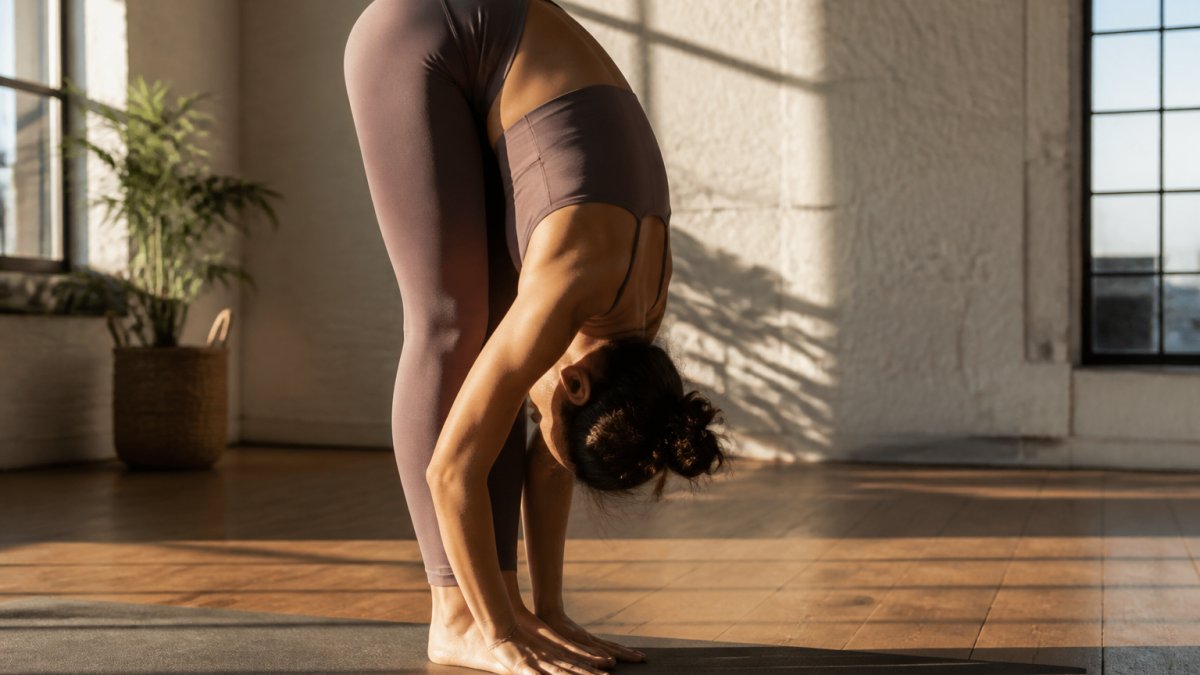
Four-way stretch fabric is the baseline. The Women's High Waist Yoga Sports Leggings apply the same four-way stretch in a squat-proof polyester-spandex with a high waist that holds position through a full class without needing adjustment.

Where flexibility breaks down is at the seams. A thick seam at the inner thigh or behind the knee creates a hard stop at the end of a stretch. Seamless construction removes that stop.
Fabric, Heat, and Sweat: What Breathability and Opacity Mean in Practice
Breathability and opacity are the two fabric qualities that decide whether a legging works in a hot class. But there is a third factor most comparisons ignore: how waistband height and coverage affect heat and sweat. A high-rise band covers more of your midsection, which can trap heat in hot yoga. A mid-rise band exposes more skin, which can feel cooler but may lead to slipping if sweat reduces friction.
How Waistband Coverage Affects Heat and Sweat
In a heated or fast-paced class, a fabric that traps sweat gets heavy and clings. A high-rise band adds an extra layer across your stomach and lower back. If that fabric is not breathable, it becomes a heat trap.
The solution is not to avoid high-rise in hot yoga. It is to choose a high-rise band made from a quick-dry, breathable knit that moves moisture away from your skin.
Opacity: Why High-Rise Does Not Guarantee Squat-Proof
Sheer fabric is usually a density problem, not a rise problem. A high-waisted legging in a thin fabric will still go sheer. Check the fabric weight and the squat-proof claim, not just the waist height. Look for fabrics with enough density to stay solid at full stretch, often a polyester-spandex blend with a tight knit. If you can see your hand through the fabric when you stretch it, it will go sheer in a forward fold.
Fabric Properties That Matter in Yoga
| Fabric Property | What It Does | Why It Matters in Yoga |
|---|---|---|
| Quick-dry knit | Moves moisture away, dries fast | Keeps you from finishing class in damp fabric |
| Four-way stretch | Stretches in both directions | Follows folds and twists without pulling |
| Seamless build | Removes bulky seam ridges | Prevents chafing and hard stops in a stretch |
| Squat-proof density | Holds opacity at full stretch | No see-through at the bottom of a squat or fold |
| Compression band | Holds the waistband flat | Reduces rolling and readjusting mid-class |
| Breathable waistband | Allows heat to escape | Prevents overheating in hot yoga |
Practical Checks Before You Buy
- Stretch test: Pull the fabric sideways. If it snaps back flat with no ripple, it will hold through a class. If it stays stretched or bunches, it will roll.
- Opacity test: Place your hand inside the legging and stretch the fabric over it. If you can see your hand clearly, it is not squat-proof.
- Breathability test: Hold the fabric up to a light. If light passes through easily, it is likely breathable. If not, it may trap heat.
Fit Across Body Types: Rise, Compression, and Individual Trade-Offs
Fit across body types is where the honest answer to this question lives. There is no single rise that works for every body, and any brand that says otherwise is selling, not advising.
A few general patterns:
- Longer torso: High-rise and ultra-high-rise bands sit comfortably at the natural waist.
- Shorter torso: A high band may ride toward the ribs in seated poses. Mid-rise can feel more natural.
- Curvier hips: A wider band with light compression holds better than a narrow, tight band.
The right move is to match the rise to your torso length and the compression level to your comfort, not to copy what someone else wears.
If you want maximum coverage and shaping, the Ultra-High-Waist Seamless Fitness Leggings offer the highest rise and sculpting compression in our range, with sizes from S to 5XL. If you want a lighter, breathable option for studio sessions and warm-weather workouts, the High-Waisted Seamless Yoga Activewear set pairs stretch nylon-elastane with a seamless finish and a high-waisted silhouette that adds coverage as you bend and stretch.

Conclusion: When High-Waisted Activewear Earns Its Place in Your Yoga Bag
The real challenge is not choosing a rise. It is finding a waistband that holds its position through the poses you actually practice.
At SheRoar by Black Lion, we build our yoga leggings around that idea, with seamless construction, secure high-waist bands, and squat-proof fabrics designed for both the studio and everyday wear. Explore the collection and find the fit that matches your practice.
Frequently Asked Questions
Are high-waisted leggings better for yoga?
For most people, yes. A higher rise sits above the hip bones, so the waistband has more surface area to grip and is less likely to shift when you fold, twist, or invert. That extra coverage also means you are not tugging at your waistline mid-flow. The exception is personal comfort: if you find high-rise bands dig in during seated forward folds, a mid-rise pair with a wide, flat band can work just as well.
Do high-waisted yoga leggings stay up during poses?
They stay up when the waistband is wide, flat, and made from a fabric with enough compression to grip without pinching. Look for seamless waistband construction rather than a thin elastic insert, since stitched elastic is what usually folds or rolls. A four-way stretch fabric also helps, because it moves with you instead of pulling the band downward when you lengthen through a pose.
Why does my leggings waistband keep rolling down?
Rolling usually comes from three things: a band that is too narrow for your torso length, a size that is too small so the fabric fights back, or a smooth, low-friction fabric with no grip structure. A wider tummy-control band distributes tension better than a thin elastic strip. If you are between sizes, sizing up often solves rolling faster than switching brands.
Should yoga leggings be tight or loose?
They should be close-fitting without restricting your breath or your range of motion. Yoga involves deep hip flexion and long holds, so fabric that bunches or twists will distract you. Compression fit works for most people in leggings, but if you prefer a relaxed feel, size up in a compression style rather than choosing a loose cut that slides. The test is simple: you should be able to move through a sun salutation without adjusting anything.
What should you look for in yoga leggings?
Check four things: rise (high-rise for coverage in folds and inversions), waistband construction (wide, flat, seamless), fabric (four-way stretch with moisture-wicking), and opacity (squat-proof so nothing shows through in deep bends). Breathability matters too if you practise hot yoga or sweat heavily. Beyond the spec sheet, try a few poses in the fitting room or check the return policy before committing.