How to Find a Sports Bra for HIIT Workouts Large Bust

Table of Contents
- Why a Standard Sports Bra Fails During HIIT With a Large Bust
- How to Measure Bra Size for Sports Bras: The Only Measurement That Matters
- Encapsulation vs Compression Sports Bras: Which One Handles HIIT Bounce Better?
- Key Features to Look for in a Sports Bra for HIIT With a Large Bust
- Signs Your Sports Bra Doesn't Fit (and What to Do About It)
- How to Care for High-Impact Activewear So It Lasts
- Postpartum and Nursing Considerations for HIIT Support
- Conclusion
- Frequently Asked Questions
Last Updated: October 2, 2026
Why a Standard Sports Bra Fails During HIIT With a Large Bust
A standard sports bra fails during HIIT with a large bust because it was built for a B cup, not for the force your body generates.
The physics are unforgiving. Breast tissue has no internal support structure. It relies entirely on the skin and the Cooper's ligaments, and once those stretch, they do not snap back.
Here is what most guides get wrong: they treat "high-impact" as a marketing label rather than a measurable force.
Cleveland Clinic guidance on breast health and exercise
How to Measure Bra Size for Sports Bras: The Only Measurement That Matters
The only measurement that matters for a sports bra is your underbust band size, because the band carries roughly 80% of the support load. Get the band wrong and no amount of cup engineering will save you.
Step 1: Measure Your Band Size
Wrap a soft tape measure snugly around your ribcage, directly under your bust, keeping it level all the way around. Exhale fully before you read the number. If the result is even, add nothing; if it is odd, round up to the next even number. That number, in inches, is your starting band size.
Step 2: Measure Your Bust and Calculate Cup Volume
Measure around the fullest part of your bust, across the nipple line, without compressing the tissue. Subtract your band measurement from your bust measurement.
For a sports bra specifically, size down in the band if you are between sizes. A band that feels slightly firm when you first put it on will relax with wear, and a loose band rides up your back the moment you start jumping.
| Measurement | Where to Measure | Common Mistake |
|---|---|---|
| Band size | Ribcage, under bust, level | Measuring over a padded bra |
| Bust size | Fullest part, nipple line | Pulling the tape too tight |
| Cup volume | Bust minus band | Assuming cup size is fixed |
| Strap length | Over shoulder, adjusted | Leaving straps too loose |
Encapsulation vs Compression Sports Bras: Which One Handles HIIT Bounce Better?
Encapsulation sports bras handle HIIT bounce better than compression bras for larger busts, because they give each breast its own molded cup instead of pressing both flat against your chest.
Encapsulation is the biomechanically superior choice for high-impact training. Separate cups hold each breast individually, limiting the independent movement that causes tissue displacement and ligament strain.
The trade-off is cost and bulk. Encapsulation bras use more supportive paneling and often an underwire or structured seam, which means a higher price and a slightly heavier feel.
Key Features to Look for in a Sports Bra for HIIT With a Large Bust
The features that matter most are a wide, adjustable band, individual cup separation, and moisture-wicking fabric that does not stretch out. Everything else is secondary.
Adjustable Straps and Shoulder Strap Width
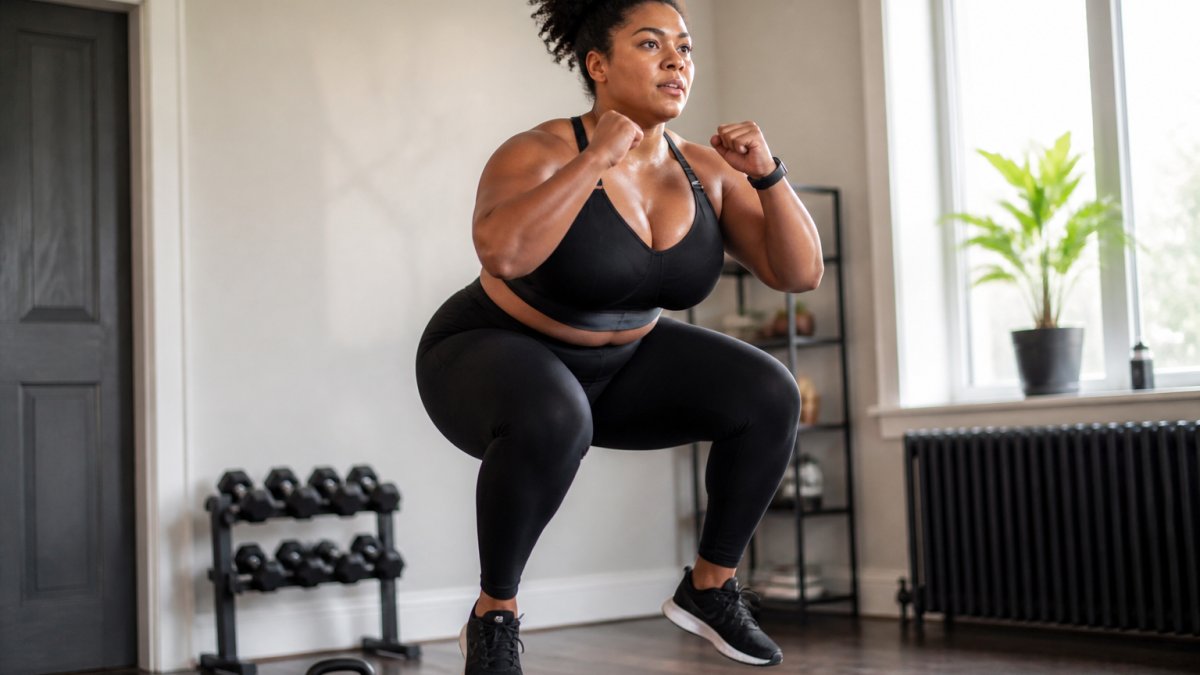
Adjustable straps let you dial in the fit as the fabric relaxes, and wider straps spread the load so the weight of a fuller bust does not cut into your shoulders. Look for straps at least 2 centimetres wide, ideally padded, with a hook-and-eye closure or a racerback option that lets you convert the shape for different workouts.
Fabric, Breathability, and Sweat Management
High-intensity training produces sweat fast, and a bra that holds moisture will chafe. Choose moisture-wicking fabric with enough elasticity to recover its shape after repeated washing. A wire-free shockproof design with a quick-dry construction keeps you dry through the hardest sessions without the underwire digging into your ribcage. Breathability matters most under the band and between the cups, where heat builds up.

Signs Your Sports Bra Doesn't Fit (and What to Do About It)
Signs your sports bra doesn't fit include a band that rides up, straps that leave deep grooves, spillover at the top or sides, and any bounce you can feel during a jump. But for HIIT with a large bust, you need more than a static checklist. You need to test the bra under the actual forces of your workout. Most guides stop at 'jump in place,' but that doesn't replicate the multi-directional load of a burpee or a lateral shuffle.
The Jiggle Test: A 5-Minute Movement Protocol
Perform these movements in front of a mirror, wearing the bra you're evaluating. If you feel uncontrolled movement, see tissue displacement, or need to adjust the bra mid-test, it fails.
-
Jumping Jacks (30 seconds) - Start with feet together, then jump out while raising arms. Watch for vertical bounce and whether the band lifts off your ribcage. A supportive bra should keep your bust firmly in place with minimal upward travel.
-
High Knees (30 seconds) - Run in place, driving each knee up to hip height. This adds forward-and-back motion. Check for side-to-side sway and whether the center panel stays flat against your sternum.
-
Burpees (5 repetitions) - Perform a full burpee at a moderate pace. The transition from standing to plank to jump creates a figure-eight motion. Pay attention to any shifting of the cups or straps digging into your shoulders as you move.
-
Lateral Shuffles (30 seconds) - Shuffle side to side over a short distance. This tests lateral stability. Your bust should not slide independently inside the cups; encapsulation should hold each breast in place.
-
Arm Circles (10 forward, 10 backward) - Raise arms to shoulder height and make large circles. This checks strap security and whether the band stays level when you raise your arms.
If at any point you feel a 'sloshing' sensation, see your breasts moving separately from the bra, or have to tug the band down, the bra is not providing adequate support for HIIT.
What to Do When a Bra Fails
If a bra fails two or more of these movements, replace it. A common mistake is tightening the straps to compensate for a loose band, which transfers the load to your shoulders and causes the neck and upper back pain many women blame on their workouts. Instead, re-measure your band size, if the band is correct, the issue may be cup shape or encapsulation quality.
How to Care for High-Impact Activewear So It Lasts
High-impact activewear lasts longest when you wash it cold, skip the dryer, and never let sweat sit in the fabric. But for a large bust, HIIT accelerates wear in ways standard care advice doesn't address. The elastic in the band and straps degrades faster under repeated high-load stretching, and once it loses recovery, the bra is structurally compromised, even if it looks fine.
Why HIIT Degrades Bras Faster
Every jump squat and burpee stretches the band and straps to their limit. Over time, the spandex fibers fatigue and lose their ability to snap back. Heat, sweat, and detergent residue speed up this process. For a large bust, the load is greater, so degradation happens sooner. A bra that feels snug at purchase may become dangerously loose after 30-40 high-intensity washes if not cared for properly.
Care Habits That Preserve Elasticity
- Rinse or wash within a few hours of training to stop sweat from breaking down the fibers.
- Use cold water and a gentle cycle, and never use fabric softener, which coats the elastic and reduces its stretch.
- Skip the dryer entirely; lay flat or hang to dry away from direct heat.
- Wash bras in a mesh bag to stop hooks snagging other garments.
- Rotate between at least three bras so each one recovers between wears.
- Avoid wringing or twisting the band; gently press water out instead.
How to Tell When a Bra Has Lost Its Structural Integrity
Even with perfect care, elastic eventually fails. For HIIT with a large bust, a bra that has lost its recovery is no longer safe. Check these signs every few months:
- Band stretch test: When you pull the band away from your body, it should snap back immediately. If it stays stretched or returns slowly, the elastic is gone.
- Strap recovery: Adjust straps to your usual setting. If you need to tighten them more than before to get the same support, the band or straps have relaxed.
- Cup shape: Look for wrinkles or folds in the cups that weren't there when new. This indicates the fabric has lost its ability to mold to your shape.
- Underbust ride-up: If the band rides up your back during the day, it's too loose, even if it used to fit.
When two or more of these signs appear, replace the bra. Continuing to wear a degraded bra during HIIT not only reduces support but also increases the risk of ligament strain. A well-made bra with high spandex content holds its shape through repeated washing.
Postpartum and Nursing Considerations for HIIT Support
Postpartum and nursing women need more support than before pregnancy, not less, because breast tissue changes size and density with milk supply.
If you are nursing, look for a bra that opens easily without losing its structure, and size up in the band if you are still carrying pregnancy weight around the ribs. Feed or pump before training to reduce breast weight and tenderness.
Conclusion
Finding a sports bra that actually holds during HIIT with a large bust is harder than it should be, and most of the bras on the market were never designed for the force you generate. The fix is a firm band, true encapsulation, and fabric that recovers. SheRoar by Black Lion builds wire-free shockproof bras with gathering construction that shapes and lifts without shifting, high-stretch spandex that holds through repeated washing, and sizes from S to 5XL, including a full-cup quick-dry option for high-movement days. Get your measurement right, then see the catalog and dress the woman you are becoming.

American Council on Exercise guidance on choosing workout apparel
Frequently Asked Questions
What features should I look for in a sports bra for HIIT?
Look for encapsulation or a hybrid design, adjustable straps at least 2 cm wide, a wide band with a hook-and-eye closure, and moisture-wicking fabric. For a large bust, wire-free shockproof styles like SheRoar's High-Intensity Seamless Shockproof Sports Bra (S-5XL) offer seamless chafe-free support. Avoid thin straps and unadjustable bands. Prioritize movement testing before committing.
How can I tell if a sports bra provides enough support for large breasts?
Do the Jiggle Test: jump in place, do 10 jumping jacks, and check for vertical bounce. If your bust moves more than 2-3 cm, it's not enough. Also check for band ride-up and strap slippage. A well-fitted bra should keep tissue displacement minimal and stay put. If you feel pinching or see gaping, size or style is wrong.
How often should I replace my high-impact sports bra?
Replace every 6-12 months with regular HIIT use (3-4 times per week). Signs it's time: stretched-out band, lost elasticity, pilling fabric, or visible wear on straps. Rotating two bras extends their life. Hand washing and air drying can add months. If the bra no longer passes the Jiggle Test, retire it.
Is it better to have an underwire or compression bra for high-impact workouts?
For a large bust, encapsulation (often with underwire) separates and supports each breast individually, reducing bounce more effectively than compression alone. Compression flattens breasts together, which can cause discomfort and sweat buildup. Many high-impact bras combine both. Wire-free shockproof options like SheRoar's Full Cup Quick-Dry bra offer support without underwire pressure.