How to Choose Compression Fabric for Recovery in 2026

Table of Contents
- What Compression Fabric Actually Does for Recovery
- Compression Levels mmHg Explained: Finding Your Number
- Best Fabric Blends for Compression Activewear
- How Long to Wear Compression Gear After Workout
- Sizing, Fit Accuracy, and Pressure Distribution
- Fabric Degradation: Why Your Compression Loses Its Grip
- Step-by-Step: How to Choose Your Recovery Compression
- Common Mistakes to Avoid
- Frequently Asked Questions
Last Updated: September 11, 2026
What Compression Fabric Actually Does for Recovery
Compression fabric is a stretch textile engineered to apply graduated pressure to the body, and that pressure is what drives its recovery benefits. According to Cleveland Clinic overview of compression therapy, gentle external pressure helps veins move blood back toward the heart, reducing the pooling that causes swelling and heaviness after hard training.
At SheRoar by Black Lion, we build recovery pieces around one principle: squeeze is not the same as support.
The Difference Between Squeeze and Support
Squeeze is raw tightness. Support is pressure that follows the shape of your limb and eases as it moves upward. A sock that digs in at the calf but goes slack at the ankle is squeezing. A sock with a compression gradient, tightest at the ankle and gradually looser toward the calf, is supporting. The second one helps circulation. The first one just leaves marks.
Compression Levels mmHg Explained: Finding Your Number
mmHg (millimetres of mercury) is the unit used to measure the pressure a compression garment applies. Most recovery gear falls between 15 and 30 mmHg, and the right number depends on whether you want light everyday support or firmer therapeutic pressure (peer-reviewed research).

What 15-20 mmHg, 20-30 mmHg, and 30-40 mmHg Feel Like
| Level | Feel | Typical Use |
|---|---|---|
| 15-20 mmHg | Light, snug, barely noticeable | Everyday wear, travel, mild post-workout heaviness |
| 20-30 mmHg | Firm, clearly compressive | Recovery after long runs, standing all day, swelling |
| 30-40 mmHg | Strong, medical-grade | Clinician-directed use, post-surgical support |
For most active women, 15-20 mmHg is the sensible starting point. Move to 20-30 mmHg if you're logging long distances or on your feet for full shifts. Anything at 30-40 mmHg should come with a professional recommendation, not a guess.
Best Fabric Blends for Compression Activewear
The best compression blends pair nylon for durability with spandex for stretch, then add a specialty fiber only when it earns its place. Nylon holds shape and resists abrasion. Spandex delivers the dynamic elasticity that lets fabric snap back after every squat and stride. But fiber content is only half the story, how those fibers are knit and finished decides whether the garment actually holds its rated pressure.
Nylon, Spandex, and Copper-Infused Options Compared
- Nylon-spandex: The workhorse blend. Durable, smooth, holds pressure well. Nylon's abrasion resistance keeps the knit from thinning at high-wear zones like the heel and calf.
- Polyester-spandex: Lighter and faster-drying, better for sweat-heavy sessions. Polyester moves moisture along the fiber surface rather than absorbing it, so the fabric stays lighter against skin.
- Copper-infused nylon: Adds odor resistance and a soft hand feel. [Our Sports Compression Socks use copper-infused nylon for exactly this](/products/sports-compression-socks) reason.
- Microfiber blends: Soft against skin, good for sensitive skin and all-day wear.
Four-Way vs. Two-Way Stretch
Stretch direction matters as much as fiber content. Two-way stretch fabric stretches along one axis, usually crosswise, and is common in cheaper sleeves and socks. Four-way stretch fabric stretches both crosswise and lengthwise, which lets the garment conform to a limb's changing circumference without riding up or binding at the knee or ankle. For recovery gear that has to hold a gradient, four-way stretch is the safer choice because the fabric can expand and contract in every direction the body moves.

Denier, Knit Density, and Why They Decide Pressure Retention
Denier is the weight of the yarn: higher denier means a thicker, denser yarn. A denser knit with a higher denier holds pressure longer than a thin, loose knit, even when both list the same fiber content. This is why two socks can both say "80% nylon, 20% spandex" and behave completely differently after ten washes. When you compare labels, look for knit density or grams-per-square-meter if the brand publishes it, a heavier knit generally means more stable compression over time.
Moisture-Wicking and Breathability
Moisture-wicking and breathability are not the same property. Wicking moves sweat away from skin to the fabric surface, where it can evaporate. Breathability is how easily air passes through the fabric. A tight compression knit can wick well but breathe poorly, which is why recovery gear for hot climates often uses lighter denier or mesh panels behind the knee. If you run hot or live in a humid climate, prioritize a lighter knit with ventilation zones rather than the heaviest denier available.
A Gap Most Guides Miss: Texture and Sensory Sensitivity
If you have a chronic condition that affects connective tissue or circulation, such as EDS or POTS, you may need compression but struggle with the tactile feel of standard athletic knits. Rough seams, stiff denier, and slick synthetic surfaces can make a garment unwearable even when the pressure is correct. In that case, look for flatlock or seamless construction, brushed microfiber interiors, and soft cuff edges. The goal is the same pressure with a gentler hand feel, and it is a legitimate selection criterion, not a compromise.
Climate and Layering
Recovery fabric should match your climate. In hot weather, a lighter denier with mesh ventilation keeps you cooler without losing gradient. In cold weather, a heavier knit or a wool-blend layer worn over the compression piece adds warmth without changing the pressure underneath. Layering a thin compression sock under a looser thermal sock is a common pattern for winter recovery, because the compression layer stays against skin while the outer layer handles insulation.
How Long to Wear Compression Gear After Workout
Wearing compression for 1 to 3 hours after training covers most recovery needs. Some athletes keep it on longer for travel or standing shifts, but the benefit curve flattens after a few hours, and overnight wear is best reserved for garments your clinician recommends.
The practical rule: put it on within an hour of finishing, keep it on through your cooldown and commute, then take it off. Consistency matters more than duration.
Sizing, Fit Accuracy, and Pressure Distribution
Fit accuracy decides whether compression works at all. Measure your ankle and calf circumference, then match those numbers to the brand's size chart rather than your shoe size or clothing size.
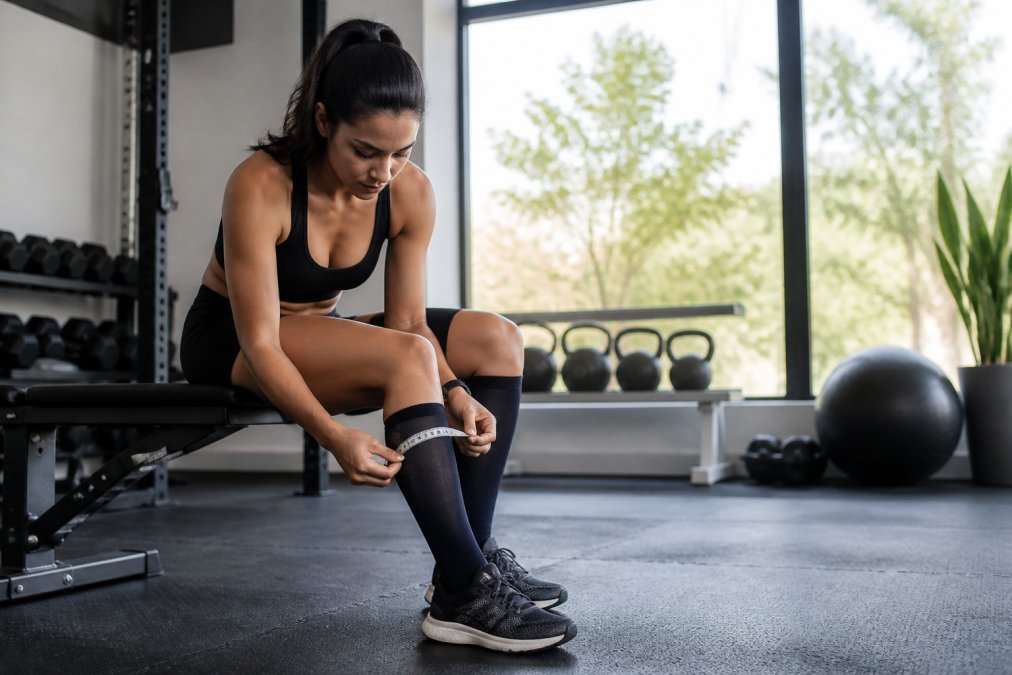
How to Measure for Recovery Compression
Measure in the morning, before swelling builds from standing or training. For socks, take ankle circumference at the narrowest point above the ankle bone, calf circumference at the widest point, and calf length from the floor to the back of the knee. For sleeves or leggings, add thigh circumference at mid-thigh. Write the numbers down and compare them to the brand's chart, do not round up to a size that "feels safer," because an oversized garment slides and loses its gradient.
Medical vs. Athletic Compression Standards
Medical compression is graded and often regulated, with pressure ratings tied to clinical use and fitted by a professional. Athletic compression is not held to the same standard, which means two "20-30 mmHg" athletic socks from different brands can feel very different. A common pattern is that athletic gear is designed for movement and breathability, while medical gear prioritizes precise, stable pressure. If you are managing a diagnosed circulatory condition, a clinician-fitted medical garment is the appropriate starting point; athletic compression is for recovery support around training, not a substitute for treatment.
Pressure Distribution and Gradient Mechanics
Pressure distribution follows fit. A garment that's too loose slides and bunches, concentrating pressure in the wrong spots. One that's too tight restricts blood flow instead of supporting it. Graduated compression works because pressure is highest at the ankle and decreases as it moves up the limb, which helps move fluid toward the heart (peer-reviewed research). If the gradient is reversed or uneven, the garment can do more harm than good. Seamless construction helps here, because fewer seams mean fewer pressure points digging into your skin.
Choosing Based on Activity Type
Different activities load different zones. Runners and walkers usually need calf and ankle support, so a graduated sock or calf sleeve is the practical choice. Lifters and CrossFit athletes often prefer sleeves that stay put through repeated flexion, which favors four-way stretch and a denser knit. People who stand all day, nurses, retail staff, teachers, tend to do best with a 15-20 mmHg sock worn through the shift. Travelers benefit from the same light-to-moderate range for long flights and drives. Match the garment to the activity, not to the label alone.
When to Size Up or Down
Size up if you are between sizes and the garment is for everyday wear, because a slightly looser fit still supports without binding. Size down only if the brand's chart explicitly calls for it and you have measured carefully. If you have significant swelling, measure when swelling is at its lowest and note that the garment may feel tighter later in the day, that is normal, but it should never leave deep marks or numbness.
Fabric Degradation: Why Your Compression Loses Its Grip
Compression fabric degrades with every wash cycle, and elastic recovery is the first thing to go. Heat, fabric softener, and the dryer break down spandex fibers faster than anything else, which is why a garment that felt firm in month one feels slack by month six.
Two habits extend garment longevity:
- Wash cold, on gentle, and air dry
- Skip fabric softener entirely, since it coats fibers and blocks breathability
Check elastic recovery by stretching the cuff and seeing whether it snaps back. When it stays stretched, the compression is spent.
Step-by-Step: How to Choose Your Recovery Compression
Choosing compression fabric for recovery comes down to matching pressure, fiber, and fit to your actual routine. Work through these steps in order.
- Set your pressure target. Light (15-20 mmHg) for daily wear, firm (20-30 mmHg) for training recovery.
- Pick your fiber blend. Nylon-spandex for durability, copper-infused for odor control, microfiber for sensitive skin.
- Measure before you buy. Ankle and calf circumference, taken in the morning before swelling builds.
- Check the knit. Denser knits hold pressure longer than thin ones.
- Test the stretch. The fabric should rebound, not stay stretched.
- Plan your care routine. Cold wash, air dry, no softener.
- Replace when recovery fades. If it no longer feels firm, it's no longer working.
[For a lower-commitment starting point, our Ankle Compression Foot Sleeve delivers targeted pressure where foot fatigue](/products/ankle-foot-angel-anti-fatigue-compression-foot-sleeve) starts.

Common Mistakes to Avoid
The biggest mistake is treating all compression as interchangeable. A fashion legging with a tight waistband is not recovery compression, and neither is a sock bought purely on color.
Other frequent errors:
- Wearing compression overnight without clinical guidance
- Judging fit by how tight it feels in the first minute
- Ignoring fabric fatigue and expecting year-old gear to perform like new
- Choosing 30-40 mmHg when 15-20 mmHg would do the job
Recovery is where your training actually sticks, and the gear you wear during those hours matters as much as what you wear to the gym. At SheRoar by Black Lion, our compression socks and foot sleeves are built with copper-infused nylon, graduated pressure, and anti-slip construction so they stay put through long days and longer runs. Explore the full compression collection and find the pressure level that fits your routine. Get started with SheRoar by Black Lion and give your legs the support they've earned.
Frequently Asked Questions
Which is tighter, 15-20 mmHg or 20-30 mmHg?
20-30 mmHg is tighter. The numbers measure pressure in millimeters of mercury. 15-20 mmHg is mild compression, good for travel or light post-workout recovery. 20-30 mmHg is moderate and better for significant swelling, varicose veins, or post-surgical support. 30-40 mmHg is medical-grade and should only be used under a doctor's guidance. Pick the lowest level that gives you the relief you need.
How does compression fabric actually aid in muscle recovery?
Compression fabric applies graduated pressure that supports venous return, helping blood flow back toward the heart. This reduces swelling and clears metabolic waste faster. It also limits muscle oscillation during movement, which cuts down on micro-tears. The result is less soreness and quicker bounce-back. Fabric choice matters: four-way stretch with spandex and nylon holds pressure better than cotton blends that lose shape after a few washes.
Can you wear compression fabric for too long?
Yes. Wearing compression gear for more than 8 to 10 hours without a break can reduce circulation and cause skin irritation. For post-workout recovery, 2 to 4 hours is usually enough. If you wear compression socks for travel or long shifts, take them off when you get home. Listen to your body: numbness, tingling, or deep grooves in your skin mean it is time to remove them.
What is the difference between medical-grade and athletic compression fabrics?
Medical-grade compression follows strict pressure standards and is regulated for conditions like edema or post-surgical care. Athletic compression is designed for performance and comfort, often with moisture-wicking and four-way stretch. Athletic versions may not deliver the same precise pressure gradient. If you have a medical condition, choose a medical-grade garment. For workout recovery, a well-made athletic compression sock or sleeve with nylon and spandex works well.