Strength Training vs Cardio for Weight Loss: What Wins

Table of Contents
- Strength Training vs Cardio for Weight Loss: The Core Comparison
- The Case for Strength Training: Build Muscle, Burn More at Rest
- The Case for Cardio: Direct Calorie Burn and Heart Health
- How to Combine Cardio and Weights: A Strength Training and Cardio Workout Plan
- Cardio Before or After Weights? What the Evidence Says
- How Long Should a Cardio Workout Be for Weight Loss?
- Fat Loss While Preserving Muscle: Nutrition, Recovery, and Progress Tracking
- Frequently Asked Questions
Last Updated: October 18, 2026
Strength Training vs Cardio for Weight Loss: The Core Comparison
Strength training vs cardio for weight loss is not a rivalry with one clear champion. It is a division of labor, and the split you choose determines whether the scale moves fast or your body composition changes in ways the scale never shows.
Here is the short answer most guides bury: cardio burns more calories per session, while strength training builds the muscle that keeps your resting metabolism working between sessions. At SheRoar by Black Lion, we talk to women every week who are doing one and neglecting the other, then wondering why progress stalls.
How Each Type Burns Calories
Cardio burns more calories during the workout itself. A steady run, a cycling class, or a brisk incline walk keeps your heart rate elevated for the full duration, and the calorie cost scales with intensity and time.
Strength training burns fewer calories per minute on the clock, but the session is only part of the story. Lifting places mechanical tension on muscle, and repairing that tissue costs energy in the hours afterward.
The practical takeaway: cardio wins the hourly calorie race, and resistance training wins the 24-hour metabolic argument. Neither wins alone.
Muscle Mass, Resting Metabolism, and Body Composition
Muscle is metabolically active tissue, meaning it burns calories just to exist. Fat is far less active. This is why two women at the same body weight can have very different resting metabolisms.
Here is where most advice goes wrong. People lift weights expecting their resting metabolism to skyrocket, then get discouraged when the scale barely moves.
Body composition, not scale weight, is the honest scoreboard. Track how clothes fit, take waist measurements, and notice strength gains in the gym. Those signals tell you whether you are losing fat or just losing weight.
The Case for Strength Training: Build Muscle, Burn More at Rest
The strongest argument for lifting is not the calories burned during the session. It is what happens to your body when you are not training.
Resistance training preserves lean muscle during a calorie deficit, and that preservation is what keeps your metabolic rate from sliding as you lose weight. It also changes shape in ways cardio cannot.
There is a second benefit that rarely gets mentioned: adherence.
The limitation is honest and worth stating. Lifting burns fewer calories per session, so if fat loss is the only goal and time is short, strength work alone produces slower scale movement than cardio alone.
The Case for Cardio: Direct Calorie Burn and Heart Health
Cardio has one advantage that strength training cannot match: it burns a predictable, meaningful number of calories per session.
Aerobic exercise also delivers cardiovascular benefits that lifting does not replicate as efficiently. Heart and lung capacity, blood pressure regulation, and endurance all respond to consistent cardio.
The limitations are equally clear. Long sessions of steady cardio can increase appetite, and high-intensity cardio done too often without recovery raises injury risk.
For a realistic picture of how much movement supports weight management, the physical activity guidelines from the CDC are a sensible baseline, not a ceiling.
How to Combine Cardio and Weights: A Strength Training and Cardio Workout Plan
The best strength training and cardio workout plan uses both, and the order matters less than most people think.
A workable structure for most women: two to three strength sessions, two to three cardio sessions, and at least one full rest day. If you are training four days a week, pair two strength days with two cardio days.
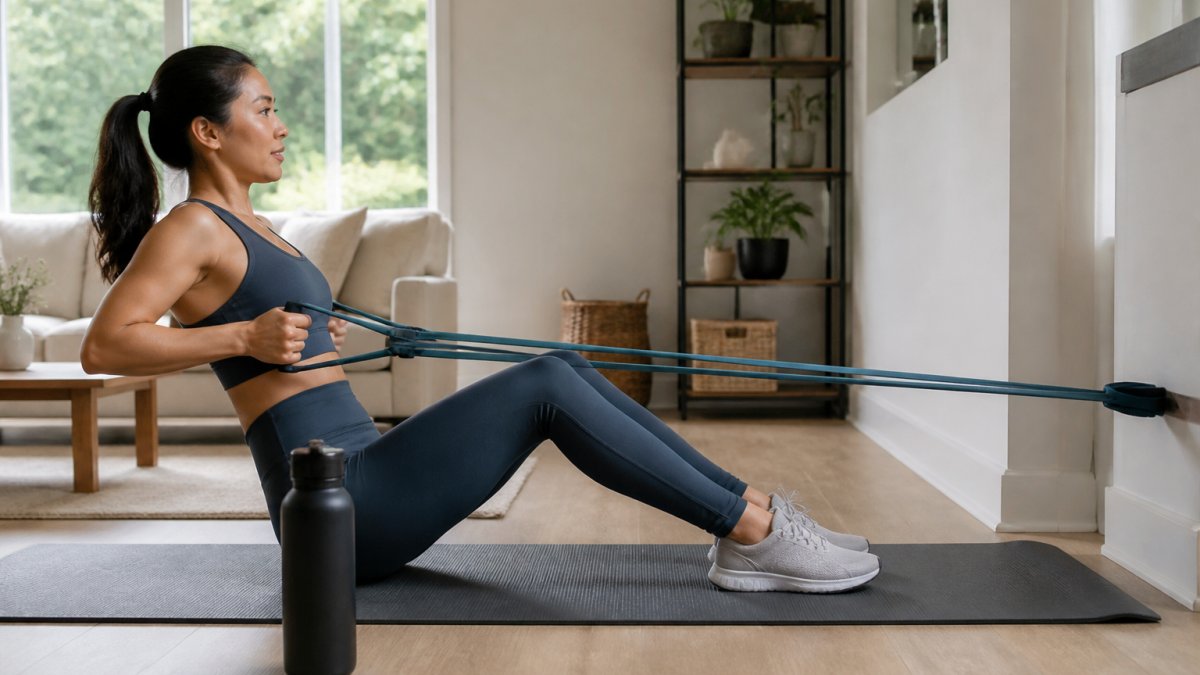
For home training, a resistance band with a foot pedal anchor makes rows, curls, and presses genuinely effective without a cable machine. Our Foot Pedal Resistance Band, Home Workout offers five color-coded resistance levels, from 15 lbs for warm-ups and mobility work up to 35 lbs for heavier pulls, so you can progress without buying new equipment every month.

Sample Weekly Schedule for Beginners
| Day | Session | Focus | Duration |
|---|---|---|---|
| Monday | Strength | Full body, compound movements | 30-40 min |
| Tuesday | Cardio | Brisk walk or easy cycle | 25-30 min |
| Wednesday | Rest | Mobility and stretching | 15 min |
| Thursday | Strength | Full body, resistance bands | 30-40 min |
| Friday | Cardio | Intervals or class | 25-30 min |
| Saturday | Optional | Light cardio or yoga | 20-30 min |
| Sunday | Rest | Full recovery | , |
Exercise Order: Lift First, Then Cardio
If your priority is building or preserving muscle, lift first and do cardio afterward, or separate them by several hours. A hard cardio session first leaves you fatigued for the weights, and over time that blunts strength gains. If your priority is endurance or you are training for an event, reverse it and do the session that matters most to your goal while you are freshest. For general fat loss, the order matters far less than total weekly volume and consistency.
Progression Rules That Actually Work
Beginners should start with two strength sessions and add cardio gradually. Progress the strength work in one of three ways each week: add a rep or two per set, add a small amount of resistance, or add a set. Do not change all three at once. A simple rule: if you can complete every set with two reps left in the tank, it is time to progress the load or the reps. If you cannot complete the prescribed reps with good form, stay at the current level until you can.
6-Tube Foot Pedal Resistance Band Set →
Adaptations for Older Adults and Mobility-Limited Readers
Older adults and anyone with joint sensitivity should favor low-impact cardio such as walking, cycling, or swimming, and use bands rather than heavy weights to build strength safely. Start with two short strength sessions per week and focus on controlled tempo rather than load. Chair-supported squats, banded rows, and standing band presses cover the major movement patterns without stressing knees or shoulders. Progress by adding reps first, then resistance. If balance is a concern, keep one hand on a stable surface during standing exercises and prioritize single-leg work only once confidence builds.
Cardio Before or After Weights? What the Evidence Says
Cardio before or after weights is the question that generates the most debate and the least consequence. The honest answer: for general fat loss, the order matters far less than total weekly volume and consistency.
That said, order does affect performance. If you do a hard cardio session first, you arrive at the weights fatigued and lift less. Over time, that blunts strength gains.
If your priority is endurance or you are training for an event, reverse it. Do the session that matters most to your goal while you are freshest.
How Long Should a Cardio Workout Be for Weight Loss?
How long a cardio workout should be depends on intensity, not a fixed number.
Moderate-intensity work, where you can talk but not sing, can be sustained longer and is easier to recover from.
Duration also interacts with your deficit. If you are eating in a modest calorie deficit, you do not need marathon cardio sessions to see progress.
For context on how movement fits into overall energy balance, the NHS guidance on healthy weight loss frames activity as one part of a broader picture that includes diet and sleep.
Fat Loss While Preserving Muscle: Nutrition, Recovery, and Progress Tracking
Fat loss while preserving muscle comes down to three levers: a modest calorie deficit, enough protein, and enough recovery. Get those right and the training almost takes care of itself.
Protein intake is the lever most women underuse. Higher protein intake supports muscle retention during a deficit and tends to improve satiety, which makes the deficit easier to hold.
Recovery is the lever most women ignore. Muscle is built while you rest, not while you train.
Progress tracking beyond the scale keeps you honest. Use a simple weekly check:
- Waist and hip measurements, same day each week
- Progress photos in consistent lighting
- Strength log: are your reps or resistance increasing?
- Energy and sleep quality
- How your clothes fit
If strength is holding or climbing while measurements shrink, you are losing fat and keeping muscle. That is the outcome worth chasing.
For broader context on how body composition responds to combined training, the American College of Sports Medicine position stands remain a useful reference point.
If you are building a home setup, our Pilates Bar Resistance Band Set covers full-body strength and flexibility work in one kit, with resistance levels from 10 lb to 50 lb so the same set grows with you.

The hardest part of strength training vs cardio for weight loss is not choosing between them. At SheRoar by Black Lion, we design activewear and training equipment for women who move with intention, from resistance band sets that make home strength work practical to apparel that transitions from the gym to the rest of your day. Explore the SheRoar by Black Lion catalog and build the routine that fits your life.
Frequently Asked Questions
Is strength training or cardio better for losing weight?
Neither is strictly better, but they serve different roles. Cardio burns more calories during the session, which helps create the calorie deficit needed for weight loss. Strength training builds and preserves muscle mass, which supports resting metabolism and body composition over time. Most sustainable results come from combining both: use strength training two to three times per week to protect lean muscle, and add cardio sessions to increase energy expenditure. The best choice is the one you will actually stick with consistently.
Can strength training help you lose fat without losing muscle?
Yes. Strength training signals your body to retain muscle while you are in a calorie deficit, especially when paired with adequate protein intake. Without resistance training, a large portion of weight lost can come from muscle rather than fat. Aim for two to three full-body strength sessions per week, progress gradually with resistance bands or weights, and eat enough protein at each meal. This combination supports fat loss while preserving muscle, which helps you look leaner at the same scale weight.
Should you do cardio before or after strength training?
For most people focused on fat loss while preserving muscle, do strength training first, then cardio. Lifting while fresh lets you use heavier resistance and maintain good form, which protects muscle. A short cardio session afterward adds calorie burn without compromising your strength work. If your main goal is endurance or you are training for a cardio event, flip the order. Keep hard cardio and heavy lifting at least six hours apart when possible to reduce interference.
How long should a cardio workout be for weight loss?
Most guidelines suggest 150 to 300 minutes of moderate-intensity cardio per week for weight management, which breaks down to roughly 30 to 60 minutes on most days. Sessions of 20 to 40 minutes of higher-intensity cardio can also work if you are short on time. Beginners should start with 15 to 20 minutes and build up. The total weekly volume matters more than any single session length, so pick a duration you can repeat consistently.
Can you combine cardio and strength training in the same workout?
Yes, and it can be efficient. A combined session typically starts with a brief warm-up, moves into strength work while you are fresh, and finishes with 10 to 20 minutes of cardio. This format suits busy schedules and still delivers both muscle-preserving and calorie-burning benefits. Keep total session time under about 60 to 75 minutes to manage fatigue. If you prefer separate days, that works too; the key is hitting both modes across your week.