How Long Do Sports Bras Last With Regular Use?

Table of Contents
- The Real Lifespan of a Sports Bra: What Wear Data Shows
- Signs a Sports Bra Is Worn Out: A Visual Inspection Guide
- How Workout Frequency and Impact Level Affect Longevity
- How to Wash Sports Bras So They Last Longer
- Material-Specific Longevity: Why Some Fabrics Outlast Others
- How Many Sports Bras Should You Own? The Rotation Strategy
- Environmental Impact of Disposal and Smarter Replacement Cycles
- Frequently Asked Questions
Last Updated: September 30, 2026
The Real Lifespan of a Sports Bra: What Wear Data Shows
Most activewear brands won't tell you this, but a sports bra has a working life measured in washes, not years. For women wondering how long do sports bras last with regular use, the honest answer sits between six and twelve months of consistent training.
Why 6 to 12 Months Is the Standard Benchmark
The six-to-twelve-month window assumes two to three wears per week with proper laundering between sessions. Push to five or six wears weekly and that timeline compresses sharply. Stretch the rotation across seven bras and the same calendar period delivers far more total workouts per garment.

Signs a Sports Bra Is Worn Out: A Visual Inspection Guide
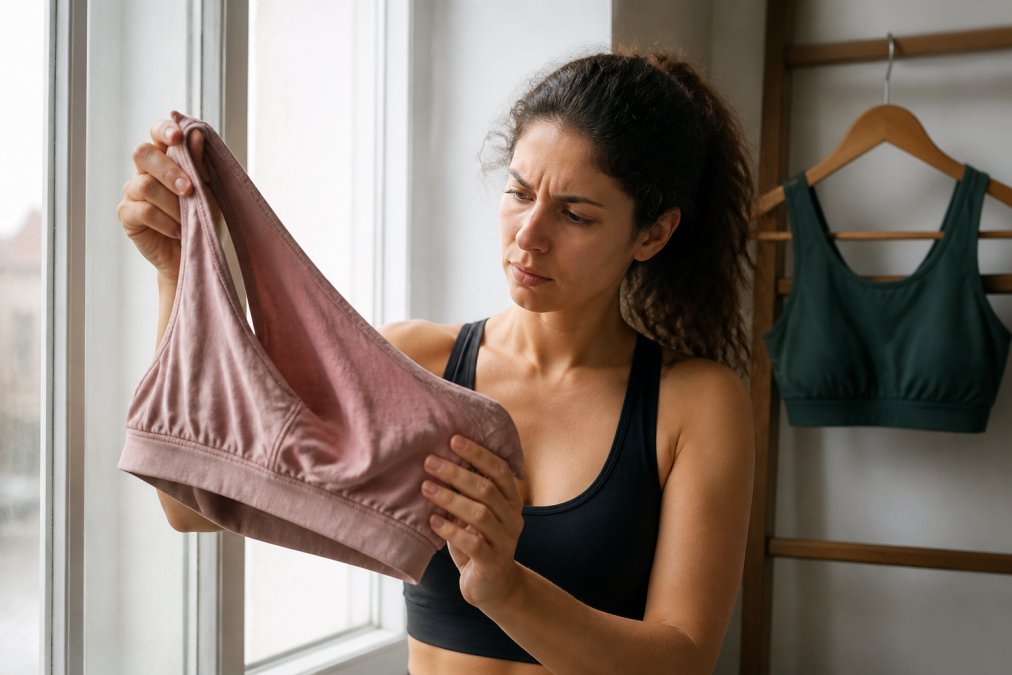
You can spot a dead bra in under sixty seconds with three checks: band tension, cup shape, and strap recovery. Run all three before your next purchase.
Stretch Test: Checking Elasticity and Shape Retention
Grab a section of the band and pull it firmly, then let go. Quality fabric snaps back immediately and flat. Fabric that returns slowly, or stays slightly deformed, has entered fiber breakdown and will only get worse. A common mistake is judging a bra by how it looks on the hanger rather than how it behaves under tension. The hanger hides everything.
How Workout Frequency and Impact Level Affect Longevity
Workout frequency and impact level are the two biggest variables in how long do sports bras last with regular use. A bra worn for three weekly yoga sessions ages far more slowly than one worn for three weekly runs.
High-Impact vs Low-Impact: The Wear Difference
High-impact activity loads the band, straps, and cup fabric with repeated force. Running, HIIT, and plyometric training demand maximum bounce control, which means the elastic works hardest every session. Low-impact work like yoga, pilates, or walking asks far less of the same materials, so the bra's structure holds longer.

| Activity Type | Typical Weekly Wears | Expected Lifespan | What Wears Out First |
|---|---|---|---|
| High-impact (running, HIIT) | 3-4 | 6-9 months | Band tension, straps |
| Mixed training | 3-5 | 6-12 months | Cup shape, elasticity |
| Low-impact (yoga, walking) | 2-3 | 12-18 months | Fabric softness, color |
How to Wash Sports Bras So They Last Longer
How you wash sports bras decides whether they survive eight months or eighteen. Sweat accumulation and body oils break down synthetic fibers from the inside, and heat finishes the job.
Machine Wash vs Hand Wash: What Actually Damages Fabric
Machine washing is not the enemy. Heat and tumbling are. A cold, gentle cycle with a laundry bag protects the fabric and the hardware, while a hot cycle with heavy agitation destroys elasticity in a handful of washes.
- Use cold water on a delicate or gentle cycle
- Place bras in a mesh laundry bag to prevent strap tangling
- Skip fabric softener, which coats moisture-wicking fibers and reduces their function
- Never put sports bras in the dryer; air dry flat or hang them
- Wash after every one or two wears to stop sweat and body oils from setting in
Material-Specific Longevity: Why Some Fabrics Outlast Others
Material choice quietly sets the ceiling on how long a sports bra lasts, because different fibers fail in different ways. Understanding the mechanism lets you predict lifespan before you buy, and read a care label like a durability spec sheet.
How Each Fiber Family Breaks Down
Elastane (spandex/Lycra). This is the fiber that delivers compression and snap-back, and it is almost always the first to fail. Elastane degrades through hydrolysis, a reaction with moisture, sweat salts, and body oils, plus oxidation from chlorine, heat, and UV. Each stretch-and-recover cycle also fatigues the polymer chains. Once enough chains slip, the fabric stops returning to its original dimensions, which is why a bra can still fit but no longer control bounce.
Reading a Care Label for Longevity Clues
A few label details predict how a bra will age:
- Elastane percentage. Higher elastane (often 15-25% in high-impact styles) means more compression but also more fiber that can degrade. Very low elastane (under 10%) usually means less bounce control to begin with.
- Fabric weight (GSM). Heavier knits generally hold shape longer than thin, lightweight ones, though they may feel warmer.
- Construction. Flatlock or bonded seams reduce chafe and stress points; traditional overlocked seams can fail earlier under repeated tension.
- Care symbols. A label that says cold wash and line dry is a signal the manufacturer expects heat to shorten the garment's life.
The Trade-Off Nobody Mentions
There is no fiber that maximizes every property at once. Elastane gives compression but degrades fastest. Polyester is durable but less soft. Cotton breathes but sags. The best-performing sports bras are engineered blends that accept a shorter elastane lifespan in exchange for support, which is exactly why the six-to-twelve-month benchmark exists. If longevity is your priority, look for high-elastane synthetics with seamless or flatlock construction, and treat the elastane as the consumable part of the garment.
How Many Sports Bras Should You Own? The Rotation Strategy
Owning five to seven sports bras is the sweet spot for anyone training three to five times a week. The rotation strategy works because each bra gets time to fully recover its shape between wears, and the whole collection lasts longer than the same number of wears crammed into one or two garments.
A practical rotation looks like this:
- 2 high-impact bras for running and HIIT
- 2-3 medium-support bras for gym sessions and cycling
- 1-2 light-support bras for yoga, pilates, and everyday wear
Environmental Impact of Disposal and Smarter Replacement Cycles
Most guides stop at "recycle it." In practice, sports bras are one of the harder garments to dispose of responsibly because they are small, multi-material, and often made of blended synthetics that municipal programs cannot easily process. Here is what actually happens to a retired bra, and how to choose the right exit for each one.
Why Sports Bras Are Hard to Recycle
A typical sports bra combines elastane, polyester or nylon, elastic banding, plastic hardware, and sometimes foam cups. Textile recyclers prefer single-fiber streams; blended elastane is notoriously difficult to separate, which is why many curbside programs will not accept athletic wear. That does not mean the bra has to go in the trash, it means the right pathway depends on its condition.
A Decision Framework for Retired Bras
1. Still supportive, just not for you. Donate. Organizations that accept gently used athletic wear include women's shelters, domestic violence shelters, and community clothing closets. Wash it first, and check whether the recipient accepts used undergarments, some do, some do not.
3. Fabric is degraded or torn. Textile recycling. Look for:
- Brand take-back programs (many activewear brands run in-store collection bins)
- Municipal textile recycling drop-offs, which are increasingly common in larger cities
- Mail-in textile recyclers that accept blended fibers and downcycle them into insulation, padding, or industrial wipes
The Preventative Angle: Fewer Replacements, Less Waste
The most effective environmental move is not better disposal, it is slower replacement. Every extra month a bra stays functional is one less garment entering the waste stream. The levers that matter most:
- Cold wash, air dry. Heat is the single biggest accelerator of elastane breakdown.
- Rotate five to seven bras. Spreading wears gives each bra time to recover its shape and slows fiber fatigue.
- Wash after one to two wears, not every wear. Over-washing is as damaging as under-washing.
- Buy for the activity. A high-impact bra worn for yoga wears out faster than one matched to its intended load.
A Note on "Compostable" and "Biodegradable" Claims
Be skeptical of marketing language here. Elastane and most performance synthetics do not biodegrade in home or municipal composting conditions, regardless of how the fabric is branded. If a bra claims biodegradability, check whether the claim applies to the whole garment or only a component, and whether it requires an industrial facility that may not exist in your area.
Frequently Asked Questions
How often should you replace a sports bra?
Most sports bras last six to twelve months with regular use. If you work out three to four times a week, expect closer to six months. High-impact activities and frequent machine washing shorten that window. Rotating between several bras extends each one's life because the elastic gets time to recover between wears. Replace when the band no longer stays put or the fabric has lost its shape retention.
What are the signs a sports bra is worn out?
The clearest signs a sports bra is worn out include a band that rides up, straps that slip off your shoulders, and cups that no longer hold their shape. Stretched-out elastic, pilling fabric, and visible fiber breakdown around the seams are also indicators. If you feel more bounce during high-impact movement than you did a few months ago, the support level has dropped and it is time to replace.
Does washing sports bras in the machine ruin them?
Machine washing does not automatically ruin sports bras, but the wrong settings accelerate fabric degradation. Use cold water on a gentle cycle, place bras in a laundry bag to protect the elastic, and skip the dryer. Heat breaks down spandex and elastane fibers faster than anything else. Air dry flat or hang to preserve shape retention and fit integrity. Hand washing extends lifespan further but is not required.
How many sports bras should you own for regular workouts?
A practical minimum is three to four sports bras if you work out three to five times a week. This lets each bra rest at least a day between wears, which gives the elastic time to recover and slows fiber breakdown. Owning five or more is ideal if you do high-impact training or sweat heavily. More bras means less frequent washing per garment, which directly extends how long sports bras last.