Sustainable Activewear Fabric Alternatives to Polyester

Table of Contents
- Why Avoid Polyester in Activewear
- Sustainable Activewear Fabric Alternatives to Polyester
- Moisture-Wicking Natural Fabrics Explained
- Environmental Impact of Synthetic Microplastics
- Best Practices for Washing Eco-Friendly Gym Clothes
- Durability and Care: Natural Fibers vs. Synthetics
- Making the Switch: What to Look for in Sustainable Activewear
- Frequently Asked Questions
Last Updated: September 20, 2026
Why Avoid Polyester in Activewear
Polyester dominates athletic wear for one simple reason: it's cheap to produce and easy to manufacture at scale. But that convenience comes with real costs that most people don't consider until they're already committed to a closet full of synthetic gear.
Polyester traps heat and doesn't breathe like natural fibers, causing sweat to sit on your skin and bacteria to thrive, which is why polyester activewear develops odor quickly. Microplastics shed from synthetic fibers with every wash, entering waterways and accumulating in ecosystems indefinitely.
For women building a sustainable activewear wardrobe, the shift away from polyester isn't about perfection. It's about understanding what your body actually needs during movement and choosing fabrics that deliver that without creating problems downstream.
Sustainable Activewear Fabric Alternatives to Polyester
Natural and semi-synthetic fibers now offer the performance qualities athletes expect while eliminating microplastic shedding and poor breathability.
Organic Cotton for Sportswear
Organic cotton is grown without synthetic pesticides or fertilizers, relying instead on natural pest management and soil health practices (Organic production and products).
Organic cotton excels in breathability and naturally wicks moisture away from skin, making it ideal for low-to-moderate intensity activities like yoga and casual gym sessions.
The limitation is durability under extreme conditions. Organic cotton softens with washing and may not hold its shape as well as merino wool or synthetic blends during high-intensity training. It also takes longer to dry than some alternatives, which can be inconvenient if you're washing frequently.
SheRoar by Black Lion's Cotton Hooded Pullover Sweatshirt demonstrates how organic cotton works for versatile, everyday wear. The cotton and elastane blend sits softly against skin without feeling heavy, and the loose silhouette accommodates movement without clinging. Available in seven colors and sizes S-XXXL, it bridges the gap between workout gear and casual apparel.

Pros:
- Naturally breathable and soft against skin
- No synthetic chemicals in production
- Biodegradable at end of life
- Comfortable for layering and everyday transitions
Cons:
- Slower drying than synthetic alternatives
- Less durable under extreme intensity
- Requires more frequent washing due to odor retention
- Can shrink if not cared for properly
Merino Wool Performance Properties
Merino wool fibers are significantly finer than traditional wool, making them soft enough for direct skin contact without the itchiness associated with conventional wool.
Merino wool naturally regulates temperature and resists odor by inhibiting bacterial growth, allowing pieces to be worn multiple times before washing, ideal for activities with fluctuating intensity.
The trade-off is cost. Merino wool pieces typically cost more than organic cotton or polyester alternatives. It also requires careful washing to maintain softness and prevent pilling.
Pros:
- Excellent temperature regulation
- Naturally odor-resistant and antimicrobial
- Soft enough for sensitive skin
- Durable through multiple washes
- Biodegradable
Cons:
- Higher price point than most alternatives
- Requires specific washing care
- Can pill if not handled properly
- Heavier than some alternatives for warm-weather training
Bamboo Viscose and Its Sustainability
Bamboo viscose is a semi-synthetic fiber made by dissolving bamboo pulp in chemical solvents. While not fully natural, it's significantly more sustainable than polyester because bamboo grows rapidly without pesticides and regenerates after harvesting.
Bamboo forests require no fertilizer, irrigation, or pesticides and regenerate after harvesting, making bamboo a genuinely renewable resource compared to petroleum extraction for polyester.
For activewear performance, bamboo viscose delivers excellent breathability and moisture-wicking properties. The fabric feels silky against skin and drapes well, making it popular for yoga and low-intensity activities. It's also naturally hypoallergenic, which benefits people with sensitive skin.
The limitation is durability under high-impact activities. Bamboo viscose weakens when wet, so intense workouts involving heavy sweating can stress the fibers. The fabric also wrinkles more easily than alternatives and may require ironing.
Pros:
- Highly renewable and sustainable sourcing
- Excellent breathability and moisture management
- Soft and hypoallergenic
- Biodegradable
- Lower environmental impact than polyester in production
Cons:
- Weakens when wet, limiting high-intensity use
- Wrinkles more easily than alternatives
- Requires careful washing and handling
- Not as durable for frequent, intense training
Performance Properties of Tencel Lyocell
Tencel Lyocell is made from wood pulp using a closed-loop process that recovers and recycles 99% of solvents, making it one of the most environmentally responsible semi-synthetic options.
Lyocell has excellent moisture-wicking properties, is stronger than viscose both wet and dry, and naturally resists wrinkles, making it ideal for intense training.
The closed-loop production process gives Lyocell a lower environmental footprint than viscose or polyester, with typically certified sustainable wood sourcing.
Cotton Hooded Pullover Sweatshirt →
The primary drawback is availability and cost. Lyocell remains less common in activewear than polyester or cotton, and pieces made with it typically command premium pricing.
Pros:
- Excellent moisture-wicking and temperature regulation
- Stronger than viscose, durable for intense activity
- Produced with closed-loop, low-waste process
- Biodegradable
- Resists wrinkles and holds shape
Cons:
- Higher cost than most alternatives
- Less widely available in activewear options
- Still a semi-synthetic, not fully natural
- Requires sustainable forestry certification to deliver environmental benefit
Moisture-Wicking Natural Fabrics Explained
The term "moisture-wicking" describes a fabric's ability to move sweat away from your skin toward the outer surface, where it can evaporate. This is fundamentally different from absorption, where a fabric soaks up moisture and holds it.
Natural fibers wick moisture through different mechanisms: merino wool's scaly surface allows water to travel along the fiber, cotton's hollow core draws moisture through capillary action, and Lyocell's molecular structure creates efficient outward pathways.
The practical difference matters during workouts. When a fabric wicks moisture effectively, sweat evaporates rather than pooling, which keeps your skin dry and regulates your body temperature. This is why natural fiber activewear feels less clammy than polyester, even when you're working hard.
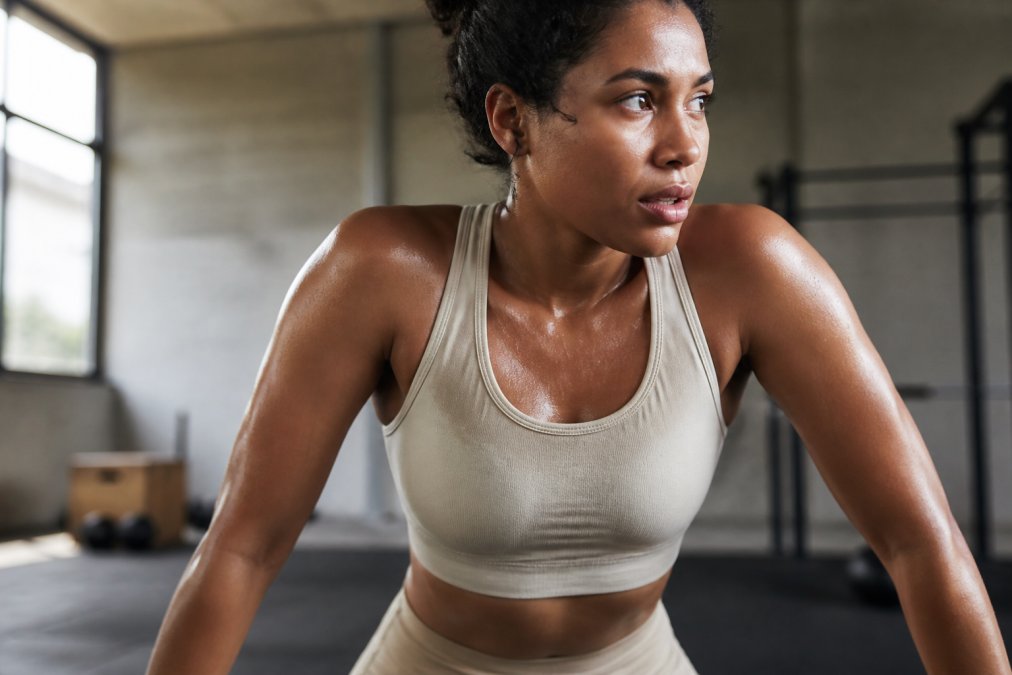
Polyester moves sweat away from skin surface but moisture sits in the fabric layer closest to your body, making gear feel wet and uncomfortable during sustained exercise.
Natural fiber activewear takes a different approach. The moisture passes through the entire fabric structure and evaporates from the outer surface, leaving the fabric closer to your skin relatively dry. This is a meaningful distinction for anyone training regularly.
Environmental Impact of Synthetic Microplastics
Every wash of polyester activewear sheds microplastics smaller than a grain of sand that pass through water treatment systems directly into waterways.
A single polyester garment sheds thousands of microplastic particles per wash cycle, hundreds of thousands over its lifetime.
Microplastics don't biodegrade and persist indefinitely in aquatic ecosystems, working their way up the food chain and into human tissue.
Natural fibers like organic cotton, merino wool, and Lyocell biodegrade completely. When these fabrics reach the end of their useful life, they return to the soil without leaving persistent pollution. This is a fundamental environmental advantage that polyester simply cannot match.
The microplastic issue isn't theoretical. It's happening with every wash of every polyester garment in circulation. Choosing sustainable activewear fabric alternatives directly reduces your contribution to this problem.
Best Practices for Washing Eco-Friendly Gym Clothes
How you care for sustainable activewear determines its lifespan and environmental impact.
Wash in cold water to preserve fabric integrity. Use a gentle cycle for merino wool and Lyocell, which are more sensitive to agitation than cotton.
Use mild detergent without bleach or optical brighteners. Avoid fabric softeners, they coat fibers and interfere with moisture-wicking properties.
Air dry when possible to preserve fabric structure.
Durability and Care: Natural Fibers vs. Synthetics
Natural fibers often outperform polyester in how long they remain comfortable and functional, despite polyester's longer raw lifespan.
Making the Switch: What to Look for in Sustainable Activewear
Transition gradually to test different fibers and understand what works for your training style.
| Fabric Type | Best For | Durability | Care Level | Cost |
|---|---|---|---|---|
| Organic Cotton | Yoga, casual wear, layering | 3-5 years | Low | Moderate |
| Merino Wool | Variable conditions, odor-sensitive | 5-10 years | Moderate | High |
| Bamboo Viscose | Warm weather, low-intensity | 3-4 years | Moderate | Moderate |
| Lyocell | High-intensity training, all conditions | 4-7 years | Low | High |
Frequently Asked Questions
What are the best sustainable activewear fabric alternatives to polyester?
The top alternatives are organic cotton, merino wool, bamboo viscose, and Tencel Lyocell. Organic cotton breathes well and feels soft but absorbs moisture. Merino wool naturally regulates temperature and resists odor. Bamboo viscose offers a silky feel and biodegradable properties. Tencel Lyocell combines sustainability with strong moisture-wicking performance, making it ideal for intense workouts. Each suits different activity levels and climate conditions.
Can natural fibers perform as well as synthetic fabrics for high-intensity exercise?
Yes, when chosen correctly. Merino wool excels at moisture management and temperature regulation during intense activity. Tencel Lyocell matches synthetic performance with superior moisture-wicking while remaining biodegradable. Organic cotton works best for moderate activity. The key is matching the fabric to your workout intensity. Natural fibers do not contribute to microplastic pollution in the same way synthetics do.
What is Tencel Lyocell and why is it used in activewear?
Tencel Lyocell is a regenerated fiber made from sustainably harvested wood pulp using a closed-loop production process that recycles 99% of solvents. Its performance properties include excellent moisture-wicking, breathability, and durability comparable to synthetic fabrics. It biodegrades naturally at end-of-life, unlike polyester. Lyocell's smooth surface reduces friction, making it comfortable for extended wear and ideal for women's activewear that demands both performance and sustainability.
How should I wash eco-friendly gym clothes to maintain their quality?
Wash in cold water to preserve natural fibers and reduce energy use. Turn garments inside out to protect prints and surface finishes. Use mild, plant-based detergents free of harsh chemicals that degrade fibers. Skip fabric softener, which coats natural fibers and reduces breathability. Air-dry when possible instead of machine drying to extend garment life. For merino wool, hand-wash or use a delicate cycle. Proper care extends the lifespan of sustainable activewear, maximizing your investment and reducing textile waste.
Why is polyester considered unsustainable for sportswear?
Polyester is a petroleum-based synthetic that sheds microplastics during washing, polluting waterways and harming marine life. Production requires significant fossil fuel energy and creates a large carbon footprint. Unlike natural fibers, polyester doesn't biodegrade and persists in landfills for centuries. Microplastic shedding from activewear is a growing environmental concern, especially for women who wash gym clothes frequently. Switching to sustainable alternatives protects ecosystems while maintaining performance.