How to Wash High-Performance Activewear Properly

Table of Contents
- Why High-Performance Activewear Needs Special Care
- How to Get Smell Out of Gym Clothes for Good
- Best Detergent for Synthetic Fabrics
- How to Wash Leggings Without Ruining Them
- Step-by-Step: How to Wash High-Performance Activewear Properly
- Drying Activewear: Air Dry vs. Tumble Dry Low Heat
- Microplastic Shedding and Eco-Friendly Laundry Habits
- Conclusion
Last Updated: August 24, 2026
Knowing how to wash high-performance activewear properly is the difference between gear that lasts two years and gear that smells like a locker room after two months. At SheRoar by Black Lion, we hear this concern constantly: women investing in quality leggings and sports bras only to watch them lose their shape, elasticity, and freshness far too soon. The culprit is almost never the fabric itself. It's the laundry routine. Below, we cover everything from pre-soak techniques to microplastic mitigation, so your performance gear stays performing.

Why High-Performance Activewear Needs Special Care
High-performance activewear is engineered with synthetic fabrics that behave very differently from cotton or linen. Polyester, spandex, and elastane are designed to wick moisture, maintain compression, and stretch without sagging. Those same properties make them uniquely vulnerable to the wrong wash conditions.
Standard laundry detergents contain enzymes and surfactants calibrated for natural fibers. On synthetic fabrics, these leave behind detergent residue that clogs the tiny pores responsible for breathability, trapping odor-causing bacteria instead. Heat is the other major enemy: high temperatures break down elastic fibers, permanently reducing elasticity and compression.
According to care guidance from the Textile Institute, synthetic performance fabrics require gentler mechanical action and lower thermal exposure than conventional textiles to maintain fiber integrity over repeated wash cycles.
Synthetic Fabrics: Polyester, Spandex, and Elastane
Polyester is the backbone of most activewear. It resists shrinking and holds color well, but it bonds strongly with body oils, making odor neutralization harder than standard detergents can manage.
Spandex (also sold as Lycra) and elastane are functionally the same material: a segmented polyurethane fiber that gives leggings their four-way stretch. These fibers degrade rapidly when exposed to chlorine, high heat, or fabric softener. Even one hot wash can reduce stretch recovery noticeably.
Microfiber blends are increasingly common in high-performance textiles. They feel softer and dry faster, but they shed more microplastics per wash cycle than coarser weaves.
Compression vs. Merino vs. Microfiber: What Changes
The biggest mistake people make is treating all activewear as one category. The wash approach should match the fabric.
Compression gear (typically polyester-spandex blends) needs cold water, a gentle or delicate wash cycle, and no fabric softener. Merino wool activewear requires a wool-specific detergent, cold water, and the delicate wash setting, never tumble dry. Microfiber fabrics attract lint aggressively in a standard laundry cycle. Always wash microfiber activewear inside a laundry bag to minimize lint pickup and reduce microplastic shedding.
| Fabric Type | Water Temp | Cycle | Detergent Type | Tumble Dry? |
|---|---|---|---|---|
| Polyester | Cold | Gentle | Sport/enzyme-free | No |
| Spandex/Elastane | Cold | Gentle | Sport/enzyme-free | No |
| Merino Wool | Cold | Delicate | Wool-specific | Never |
| Microfiber | Cold | Delicate | Sport/enzyme-free | No |
| Compression blend | Cold | Gentle | Sport/enzyme-free | No |
How to Get Smell Out of Gym Clothes for Good
Persistent odor in gym clothes is a bacterial buildup problem, not a washing frequency problem. Standard detergents don't fully neutralize the bacteria embedded in synthetic fibers; they mask it temporarily. The fix requires a two-step approach: a pre-soak that kills bacteria before the wash cycle, combined with a sport-specific detergent that lifts oils from synthetic fibers during laundry.
Pre-Soak with Distilled White Vinegar
Distilled white vinegar is the most effective natural odor neutralizer for synthetic fabrics. It disrupts the bacterial cell structure responsible for odor without damaging the fiber itself.
Fill a basin with cold water and add roughly half a cup of distilled white vinegar per litre. Submerge sweat-soaked gear and let it pre-soak for 15 to 30 minutes before washing. Do not rinse before transferring to the machine. The residual vinegar continues working during the wash cycle, and the smell dissipates completely during drying.
Post-Workout Storage Hacks That Prevent Bacterial Buildup
Most odor problems don't start in the wash. They start in the gym bag. Stuffing damp, sweat-soaked gear into a sealed bag creates ideal conditions for bacterial growth. By laundry time, the bacteria have multiplied significantly and the odor is set into the fiber.
Three habits that prevent this: (1) Air out immediately, hang or spread sweaty gear as soon as you get home; (2) Use a mesh gym bag insert to allow moisture to evaporate during transport; (3) Never store damp activewear in a sealed bag overnight. These habits alone can reduce the need for vinegar pre-soaks by half.
Best Detergent for Synthetic Fabrics
Standard household detergents are formulated primarily for cotton. On synthetic fabrics, they leave behind detergent residue that builds up over time, reducing breathability and trapping odors. The best detergent for synthetic fabrics is a sport-specific or enzyme-free formula designed to lift body oils and sweat compounds from polyester and spandex without coating the fiber.
Key things to look for on the label: "Sport" or "performance fabric" designation, no fabric softener agents, low-suds or HE-compatible formula, and no bleach or brightening agents. Use less detergent than the packaging recommends. With synthetic fabrics, excess detergent is the problem, not the solution.
According to fabric care research from the American Cleaning Institute, synthetic textiles require significantly lower detergent concentrations than natural fibers to achieve clean results without residue buildup.
How to Wash Leggings Without Ruining Them
Learning how to wash leggings without ruining them comes down to two variables: temperature and mechanical stress.

Water Temperature and Cycle Selection
Cold water wash is non-negotiable for leggings with any spandex or elastane content. Warm or hot water accelerates the breakdown of elastic fibers irreversibly. After five or six hot washes, the waistband loses its recovery and the fabric starts to bag at the knees.
The gentle cycle or delicate wash setting reduces mechanical agitation. Standard wash cycles apply significantly more friction to the fabric, which physically stresses the fiber structure over time. Turn leggings inside out before washing to protect the outer face of the fabric while allowing better contact between detergent and the surface that absorbs sweat.
Fabric Softener Warnings and What to Use Instead
Fabric softener is one of the most damaging things you can put on activewear. It coats fibers with lubricating chemicals that permanently reduce the fabric's ability to move sweat away from the skin. After a few treatments, moisture-wicking leggings stop wicking entirely.
What to use instead: a small splash of distilled white vinegar in the rinse cycle acts as a natural fabric conditioner, softening the fiber without coating it and neutralizing any remaining odor.
Step-by-Step: How to Wash High-Performance Activewear Properly
Following a consistent wash routine is the single most effective way to extend the life of your activewear.
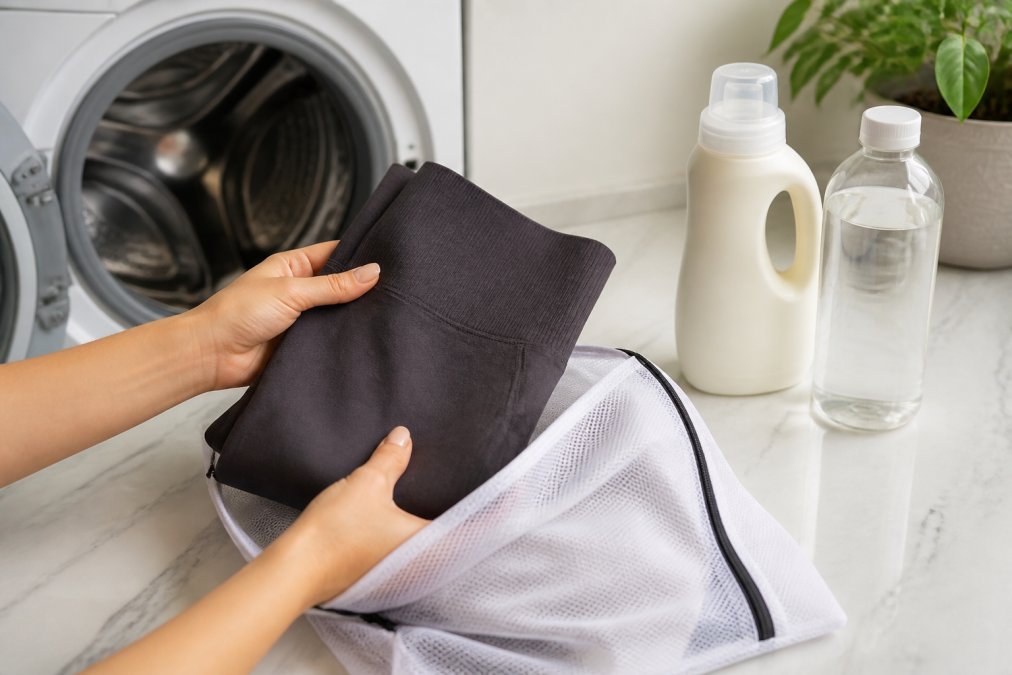
Step 1: Air out immediately after wearing [Time: 20-30 minutes] Hang or spread sweaty gear as soon as you return from your workout. Do not put it directly into a sealed laundry basket.
Step 2: Pre-soak in vinegar solution (if odor is present) [Time: 15-30 minutes] Mix cold water with distilled white vinegar (approximately half a cup per litre) in a basin. Submerge the gear and let it soak. Skip this step if the garment is freshly worn with no odor buildup.
Step 3: Sort by fabric type [Time: 2 minutes] Separate merino wool from synthetic blends. Wash them in separate loads.
Step 4: Turn garments inside out and place in a mesh laundry bag [Time: 2 minutes] The mesh laundry bag reduces mechanical friction, minimises microplastic shedding, and prevents straps from snagging.
Step 5: Select cold water and the gentle or delicate wash cycle [Time: 1 minute] Cold water wash is the correct setting for all synthetic activewear.
Step 6: Use a small dose of sport-specific detergent [Time: 1 minute] Measure less than the recommended amount. Add a splash of white vinegar to the rinse cycle compartment instead of fabric softener.
Step 7: Remove promptly after the cycle ends [Time: immediate] Do not leave activewear sitting in the drum. Remove and hang or lay flat to dry immediately.
The SheRoar by Black Lion High-Waist Butt-Lifting Moisture-Wicking Yoga Pants and Women's High Waist Squat-Proof Performance Leggings are built from high-elasticity blends designed to hold up through exactly this kind of consistent care routine.
Drying Activewear: Air Dry vs. Tumble Dry Low Heat
Air drying is the correct choice for all activewear containing spandex, elastane, or compression fibers. Heat from a tumble dryer, even on low heat, accelerates elastic fiber degradation with every cycle. Compression leggings tumble-dried regularly may lose noticeable elasticity within three to six months, while the same leggings air-dried consistently can maintain their compression and shape for years.
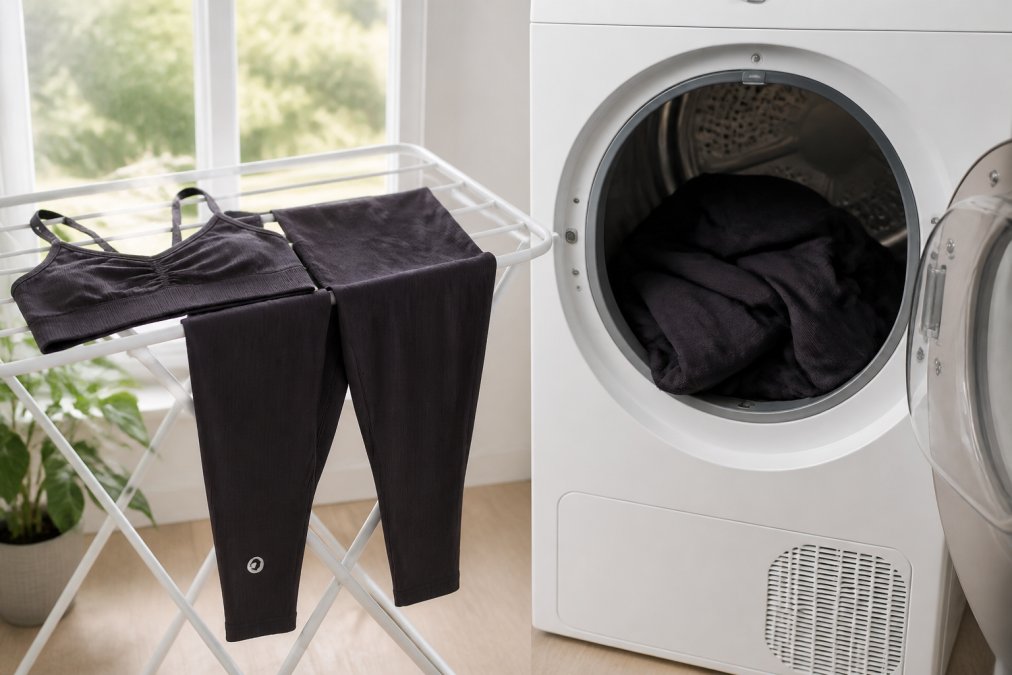
Lay garments flat or hang them on a drying rack away from direct sunlight, which causes UV degradation and fading on synthetic fabrics. If you must use a tumble dryer occasionally, use the lowest heat setting, remove garments while still slightly damp, and lay them flat to finish drying. Never iron activewear.
Microplastic Shedding and Eco-Friendly Laundry Habits
Synthetic fabrics, particularly polyester and microfiber, shed microscopic plastic fibers during every wash cycle. These microplastics pass through standard washing machine filters and enter waterways. As documented in research from the Ocean Conservancy on microplastic pollution, synthetic textiles are one of the primary sources of microplastic contamination in marine environments globally.
Practical steps to reduce shedding: Use a microplastic filter bag (such as a Guppyfriend bag) specifically designed to capture fibers during washing. Wash full loads to reduce friction per garment. Wash less frequently when possible, airing out lightly worn leggings may be sufficient. Use cold water wash, which reduces fiber stress and shedding. Choose liquid detergent over powder, which creates more friction.
Distilled white vinegar as a fabric conditioner replacement also eliminates a synthetic chemical product from the wash cycle entirely. The 3-Pack Women's High Waist Moisture-Wicking Yoga Leggings from SheRoar by Black Lion are worth noting here: having multiple pairs in rotation reduces wash frequency per item, which directly reduces cumulative microplastic shedding and extends the life of each pair.

Caring for high-performance activewear properly takes two minutes of extra thought per laundry cycle and pays back in gear that lasts significantly longer. The SheRoar by Black Lion collection is built from high-elasticity, moisture-wicking fabrics designed to hold their compression and performance through consistent, proper care. Cold water wash, a sport-specific detergent, no fabric softener, and air drying: that is the full routine. Explore the SheRoar by Black Lion catalog and get started with activewear built to go the distance.
Frequently Asked Questions
Can you use fabric softener on activewear?
Avoid fabric softener on high-performance activewear. Softeners coat synthetic fabrics like polyester and spandex with a waxy film that clogs the moisture-wicking channels built into the fabric. Once those channels are blocked, sweat stops moving away from your skin efficiently, breathability drops, and odor-causing bacteria have more time to set in. Use a small splash of distilled white vinegar in the rinse cycle instead, it softens fibres without leaving residue.
Why do my workout clothes still smell after washing?
Residual odor after washing almost always comes from detergent buildup or insufficient rinsing. Synthetic fabrics trap surfactants from too much detergent, and those residues feed odor-causing bacteria. The fix: use less detergent than the label recommends, add an extra rinse cycle, and pre-soak heavily worn gear in a cold water and white vinegar solution for 30 minutes before washing. Washing in hot water is not the answer, heat can set odors and damage elastane fibres.
Should I wash activewear in hot or cold water?
Cold water, around 30°C, is the right choice for high-performance activewear. Hot water breaks down spandex and elastane fibres faster, which causes leggings to lose their shape and compression over time. Cold water wash also reduces microplastic shedding from synthetic fabrics and uses less energy. For heavily soiled gear, a pre-soak in cold water with an enzymatic detergent handles stain removal without the fibre damage that heat causes.
How often should you wash high-performance leggings?
Wash high-performance leggings after every workout session. Sweat, body oils, and bacteria begin breaking down synthetic fibres and causing odor within hours of a session. If you train twice a day or back-to-back, rotate between two pairs, like the SheRoar 3-Pack Moisture-Wicking Yoga Leggings, so each pair gets a full wash and air-dry cycle before the next use. Wearing the same pair two sessions in a row accelerates bacterial buildup and shortens the garment's lifespan.
This article was written using GrandRanker