How to Stop Leggings From Rolling Down

Table of Contents
- Why Leggings Roll Down: The Core Causes
- How to Tell If Leggings Are Too Big
- High-Waisted vs. Mid-Waisted Designs
- How to Fix Loose Leggings Waist
- Best Leggings for No Rolling
- Choosing the Right Fabric for Your Activity
- Conclusion
Last Updated: August 30, 2026
Why Leggings Roll Down: The Core Causes
Leggings roll down during workouts because of physics meeting fabric science. When you move through dynamic exercises like squats, lunges, or yoga flows, your body changes shape. Your waist contracts, your hips shift, and gravity pulls downward. If your leggings lack the right fit, compression, and fabric elasticity, they lose their grip and slide.
The rolling-down problem almost always traces back to three core causes: improper sizing relative to your body shape, fabric degradation that reduces elasticity over time, or a waistband design that can't maintain tension during movement.
Sizing Issues and Waist-to-Hip Ratio
The most common culprit is sizing that doesn't account for your waist-to-hip ratio. Many women buy leggings based on hip measurement alone, but your waistband needs to grip your actual waist, not the widest part of your hips.
If your waist is significantly smaller than your hips, a standard size that fits your hips will be too loose at the waist and slide down during movement that changes your core position. This is especially true in yoga, where forward folds and downward dogs shift your torso.
The solution isn't always to size down, that risks uncomfortable compression across hips and thighs. Instead, look for leggings with a higher waist-to-hip ratio accommodation and a wider, structured waistband that stays in place even when your torso moves independently of your hips.
Fabric Degradation and Elasticity Loss
Leggings lose their grip over time because elastane fibers break down. Elastane (also called Lycra or spandex) gives leggings their stretch and recovery. When you wash, dry, and wear leggings repeatedly, these fibers gradually lose their ability to snap back.
This degradation accelerates with heat. High-temperature washing and machine drying damage elastane much faster than gentle washing and air drying. After 50-100 wears, depending on care, even high-quality leggings start to lose elasticity (peer-reviewed research). The waistband, which relies entirely on elastane tension, becomes the first casualty.
You'll notice this as a gradual shift: leggings that fit perfectly for the first month start to feel loose by month three. By month six, they're rolling down regularly. This is normal fabric aging. The fix is either replacing the leggings or restoring elasticity through proper laundry care.
How to Tell If Leggings Are Too Big
The fit test is simple but most people skip it.
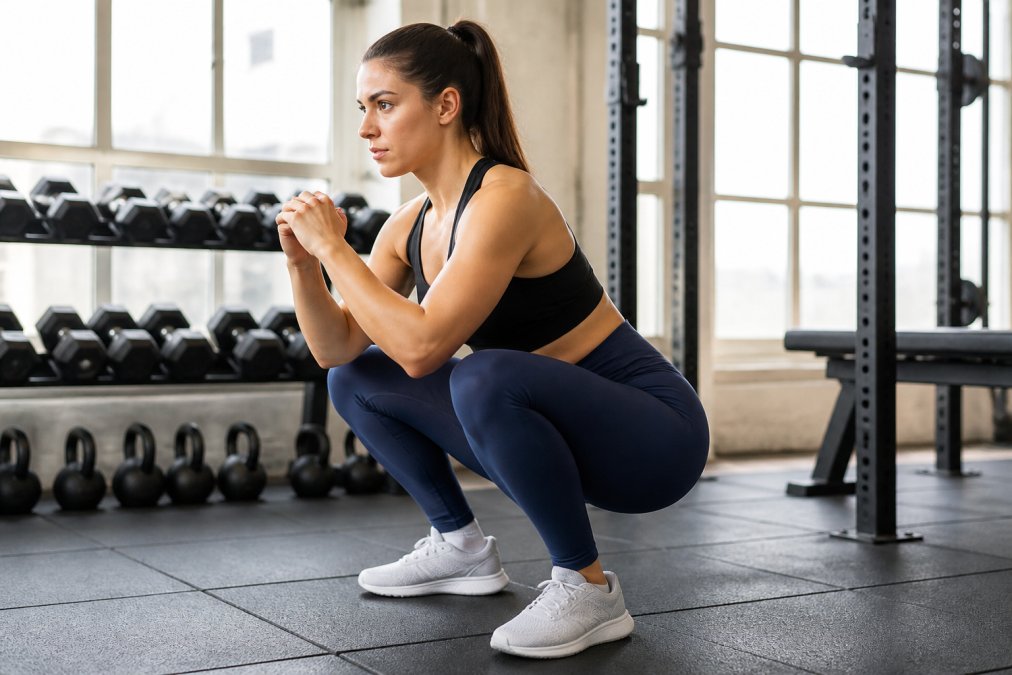
The Fit Test: What to Look For
Put on the leggings and do a basic squat without weight. Watch the waistband, it should stay in the same position relative to your body. If it slides down even slightly, they're too big in the waist.
Next, do a forward fold. Bend at the hips and let your arms hang down. The waistband should not shift. This test matters because forward folds are fundamental in yoga and stretching routines.
Do a few jumping jacks or light running in place. The waistband should stay stable. Any sliding or rolling during impact movements means the waist circumference is too large. Finally, lie on your back and do a pelvic tilt. The waistband should stay in place. If it rolls down when you're lying flat, the fit is definitely too large.
Compression Levels and Retention
Compression refers to how tightly the fabric hugs your body. Higher compression means more pressure against your skin, which creates better retention, the waistband's ability to stay in place during movement.
Compression needs to match your activity level and body shape. A yoga legging with moderate compression might be perfect for Vinyasa flow but inadequate for running. The key is finding the compression level that provides retention without restricting movement or causing discomfort.
SheRoar by Black Lion's Hip-Lifting Tummy Control Leggings use a nylon-blend four-way stretch fabric that delivers compression exactly where you need it, at the waistband and through the core, while keeping the legs flexible for dynamic movement.

High-Waisted vs. Mid-Waisted Designs
The waistband position fundamentally changes how leggings stay in place. This is a functional choice that directly impacts whether your leggings roll down.
High-waisted leggings sit above your natural waistline, typically at or slightly above your belly button. Mid-waisted leggings sit at your natural waistline. Low-waisted leggings sit below your natural waistline, on your hip bones.
For preventing rolling, high-waisted designs have a significant advantage. They cover more surface area on your torso, creating more contact points where the fabric can grip your body. The wider waistband distributes compression across a larger area, reducing the risk of digging in at a single point.
Mid-waisted leggings offer less coverage and fewer grip points. They work well if your waist and hip measurements are very close, but they're more prone to rolling with any waist-to-hip ratio variation. Low-waisted leggings are most likely to roll because they sit on your hip bones, a natural pivot point during movement.
If rolling is your problem, high-waisted is your solution. The SheRoar by Black Lion High-Waist Hip-Lift Stripe Capri Yoga Pants are engineered so the waistband does not roll down during a vinyasa flow, with hip-lift shaping that holds its position through dynamic movement.

How to Fix Loose Leggings Waist
Once you've identified that your leggings are too big or losing elasticity, you have two options: immediate fixes for your current leggings, or restoration methods to extend their life.
DIY Hacks for Immediate Relief
If your leggings are rolling down during a workout, the fastest fix is a drawstring. Many leggings have a hidden drawstring in the waistband seam. Pull it tight to cinch the waist. This is temporary but works for getting through your session.
Another immediate hack is a high-waisted sports bra or crop top that sits above the leggings. The extra layer creates friction and anchors the waistband in place. This works especially well for yoga and Pilates.
For everyday wear, pair loose leggings with a longer tunic or oversized sweater that covers the waistband. This prevents rolling from being visible and uncomfortable.
If you have access to a sewing machine, you can take in the waistband. Fold the waistband inward by a quarter inch to half inch and stitch it down. This reduces the circumference without affecting the rest of the leggings.
Laundry Care to Restore Elasticity
Elastane degrades fastest in heat. To restore elasticity and extend the life of your leggings, change how you wash them.
Use cold water only. Hot and warm water accelerate elastane breakdown (peer-reviewed research). Wash with a gentle detergent designed for delicate fabrics. Air dry your leggings instead of using a machine dryer, heat from the dryer is one of the biggest culprits in elastane degradation. Hang them to dry or lay them flat.
Avoid fabric softener and bleach, both damage elastane. If you need to freshen leggings between wears, use a fabric spray designed for athletic wear instead of rewashing.
Best Leggings for No Rolling
The best leggings for preventing roll-down combine three features: proper waist-to-hip ratio accommodation, high-quality elastane that maintains elasticity, and a waistband design that grips without digging.
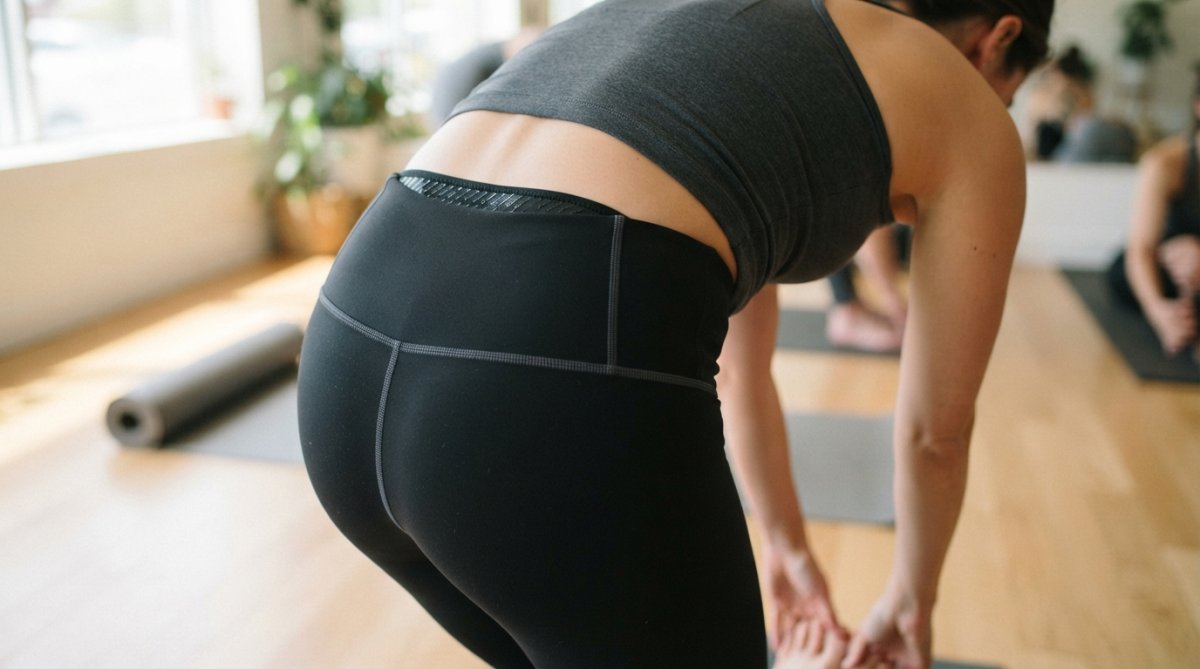
Key Features That Prevent Rolling
Look for leggings with a structured waistband seam. A flat, wide waistband distributes compression evenly and creates more contact area to grip your body. Avoid thin, rolled waistbands, they tend to fold and roll more easily.
Anti-slip silicone grip on the inside of the waistband is a game-changer. This textured coating creates friction between the waistband and your skin, preventing sliding during intense movement.
High-waist designs with hip-lift shaping are specifically engineered to stay in place. The shaping seams in the back panel provide structure that holds the leggings' position during movement.
Look for a gusset, a reinforced panel in the crotch area. A well-designed gusset prevents the entire legging from shifting down during movement.
Four-way stretch fabric provides better retention because it moves with your body rather than against it. When fabric stretches in four directions, it maintains tension across all planes of movement, preventing rolling that happens with two-way stretch fabrics.
The SheRoar by Black Lion Hip-Lifting Tummy Control Leggings exemplify these features. The wide high-waist tummy control band sits flat without folding during squats or forward bends. The hip-lift back panel seaming is structured into the cut, so it holds its shape through a full leg day. The nylon-blend four-way stretch fabric provides the compression and retention needed to prevent rolling while maintaining flexibility for dynamic movement.
Choosing the Right Fabric for Your Activity
Different activities demand different fabric properties. Choosing the wrong fabric for your workout is a common reason leggings roll down.
For yoga and Pilates, prioritize moisture-wicking and four-way stretch (acsm.org). These low-impact activities require flexibility more than compression. Nylon-based fabrics with 15-20% spandex work well here.
For running and high-impact cardio, choose higher compression and durability. Impact activities create constant downward forces that test your waistband. Look for fabrics with 20-25% elastane and labeled as "high-impact" or "compression."
For everyday wear and casual movement, moderate compression with excellent recovery is ideal. A balanced nylon-spandex blend (85% nylon, 15% spandex) provides good retention and comfort for all-day wear.
For strength training and leg-focused workouts, choose structured high-waist designs with reinforced seaming. Squats, deadlifts, and lunges create complex movement patterns that test your leggings from multiple angles. Compression tights with a gusset and structured seaming are your best bet.
Pay attention to fabric weight. Higher denier fabrics (200+ denier) are thicker and more durable but less breathable. Lower denier fabrics (100-150 denier) are lighter and more breathable but less durable. Match the denier to your activity: high-impact activities benefit from heavier fabric, while yoga benefits from lighter fabric.
The rolling-down problem is solvable once you understand what's causing it. Start with the fit test to confirm whether your leggings are too big or whether fabric degradation is the culprit. If it's sizing, invest in high-waisted leggings with a structured waistband and anti-slip grip. If it's elasticity loss, commit to cold-water washing and air drying to extend the life of your current leggings.
SheRoar by Black Lion's High-Waist Hip-Lift Stripe Capri Yoga Pants and Hip-Lifting Tummy Control Leggings are engineered specifically to prevent rolling. The waistband does not roll down during dynamic movement, and the four-way stretch fabric maintains tension through your entire workout. See our catalog to find the right fit for your activity level and body shape.
Frequently Asked Questions
Why do my leggings keep rolling down during workouts?
Leggings roll down when the waistband lacks sufficient compression, the fabric has lost elasticity, or the sizing is too large. Four-way stretch fabrics with spandex and elastane maintain their shape better than lower-quality materials. A waistband that's too loose or a fit that doesn't match your waist-to-hip ratio will cause constant sliding. Proper sizing and high-waist designs with structured seaming prevent rolling during intense movement.
How can I tell if my leggings are too big?
Perform a fit test: stand, squat, and bend forward. If the waistband gaps away from your body, slides down during movement, or feels loose around your hips, they're too big. The waistband should sit snugly without digging in. Check that the gusset (the reinforced crotch panel) aligns properly. If you're constantly pulling them up, size down or choose a design with a higher compression level.
What's the best way to fix loose leggings without buying new ones?
Try these DIY solutions: use a drawstring threaded through the waistband for adjustable tightness, wear shapewear underneath to add compression and grip, or apply fabric glue to the inner waistband for extra grip. For temporary fixes during workouts, tuck the waistband into a sports bra or use athletic tape on the inner seam. If your leggings have lost elasticity, wash in cold water, avoid the dryer, and lay flat to dry to help restore fabric recovery.
Does the type of fabric really make a difference in preventing rolling?
Yes, significantly. High-quality nylon-blend fabrics with 15-20% spandex or elastane provide superior four-way stretch and elasticity retention compared to cheaper alternatives. Denier (fabric weight) also matters: higher denier fabrics hold their shape better through movement. Moisture-wicking performance fabrics maintain compression longer than standard cotton blends. Look for leggings specifically designed with anti-slip silicone grips on the inner waistband and structured seaming in the hip and back panels for maximum retention during dynamic activities like running, yoga, or weight training.
This article was written using GrandRanker