5 Ways to Maintain Elasticity in Compression Leggings

Table of Contents
- Why Compression Leggings Lose Their Snap
- Maintain Elasticity With the Right Wash Routine
- How Tight Should Compression Leggings Be? Fit and Care
- Air Dry Only: The Heat Rule That Saves Your Gear
- Signs Compression Leggings Are Worn Out
- Storage and Rotation: Small Habits, Longer Lifespan
- Conclusion: Keep the Compression Working for You
- Frequently Asked Questions
Last Updated: September 5, 2026
Compression leggings are an investment in performance, but the elastane and spandex fibers that deliver that signature squeeze break down over time. In fact, fabric fatigue is the primary reason most athletic wear loses its fit long before it wears out. If you want to maintain elasticity in compression leggings, you need to understand that how you wash, dry, and store them matters more than the price tag. At SheRoar by Black Lion, we design leggings that hold their shape through intense sessions, and this guide covers the five strategies that keep the compression working for you.
Most guides focus on the workout, but the real battle for garment longevity happens in your laundry routine. Below, we'll show you exactly how to protect that anatomical fit, prevent sagging, and know precisely when your gear is done.
Why Compression Leggings Lose Their Snap
The culprit behind loose leggings is mechanical and chemical stress on synthetic fibers. Each wear and wash cycle stretches the elastane filaments, and detergent residue accelerates fiber degradation. When the spandex breaks, the fabric loses tensile strength, which leads to the dreaded waistband roll and baggy knees.
Heat is the most aggressive enemy. Hot water, tumble drying, and even leaving your leggings in a hot car cause the synthetic fibers to relax permanently. Moisture-wicking fabrics are designed to move sweat, but they are not designed to withstand high temperatures without losing their pressure profile.
Maintain Elasticity With the Right Wash Routine
Your wash routine is the single most effective lever you control. Maintain elasticity by turning your leggings inside out before washing, which protects the outer surface and reduces friction on the high-compression zones.
But the real depth here is in the chemistry. Most guides say "use a gentle detergent" without explaining why. The specific culprits that destroy elastane and spandex are:
- Chlorine bleach: Breaks the polymer chains in spandex on contact. Even trace amounts in "whitening" detergents accelerate fiber failure.
- Optical brighteners: These fluorescent dyes coat synthetic fibers to make them look brighter, but the coating blocks moisture-wicking and stiffens the elastane, reducing its recovery.
- Fabric softeners: They deposit a waxy Quaternary ammonium compound (quat) layer on the fibers. This traps body oils and bacteria, and it physically prevents the elastane filaments from sliding back to their relaxed state after stretching.
- Enzyme-based stain removers: Protease and amylase enzymes are designed to break down proteins and starches. While they target stains, prolonged exposure can weaken the synthetic fiber structure over time.
Follow these steps for every wash cycle:
- Wash in cold water, never above 30°C, to prevent the elastane from relaxing (oeko-tex.com).
- Use a liquid detergent labeled "free and clear", free of dyes, fragrances, bleach, and optical brighteners. Look for plant-based or mild synthetic surfactants.
- Select the delicate cycle or hand wash to minimize agitation.
- Skip the spin cycle's high speed; a gentle spin or no spin is better.
- Wash your leggings with similar colors and avoid zippers or hooks that snag.
Fabric softeners are a silent killer. They coat the synthetic fibers with a waxy residue that reduces breathability and breaks down the elastane's grip. Detergent residue builds up over time, so an occasional extra rinse cycle helps strip lingering chemicals that dull the compression.
One more chemical hazard most guides miss: chlorine from swimming pools. If you wear compression leggings for water workouts, rinse them immediately in cold fresh water. Chlorine is one of the most aggressive chemicals for elastane, and even a single session without rinsing can visibly reduce the fabric's snap. The same applies to salt water, which leaves crystalline residue that abrades fibers during the next wear.
If you notice your leggings feeling stiff or looking dull after washing, that is a sign of chemical buildup, not fabric fatigue. A vinegar rinse and a switch to a free-and-clear detergent can often restore the original feel.
How Tight Should Compression Leggings Be? Fit and Care
Compression leggings should feel snug but never restrictive. You should be able to slide two fingers under the waistband without the fabric gaping, and the material should sit flat against your skin without digging in. If you are constantly adjusting the topband during a workout, the fit is wrong, not the fabric.
Proper fit precision extends the life of your gear. When leggings are too small, the elastane is overstretched at rest, which causes premature fabric fatigue. When they are too large, the fabric rubs and pills, creating weak spots. Your compression level, measured in mmHg, should match your activity: lower for yoga and recovery, higher for running and HIIT.
The high-hip compressive fit of leggings like the Women's High-Hip Elastic Tight Breathable Sports Pants is designed to hold through dynamic movement without shifting. This means the pressure is distributed evenly across the muscle groups, reducing the strain on any single seam or fiber.

Air Dry Only: The Heat Rule That Saves Your Gear
Machine drying is the fastest way to destroy compression. The heat breaks the molecular bonds in elastane, causing permanent relaxation of the fibers. The rule is simple: air dry only. Hang your leggings flat or over a drying rack, away from direct sunlight and radiators.
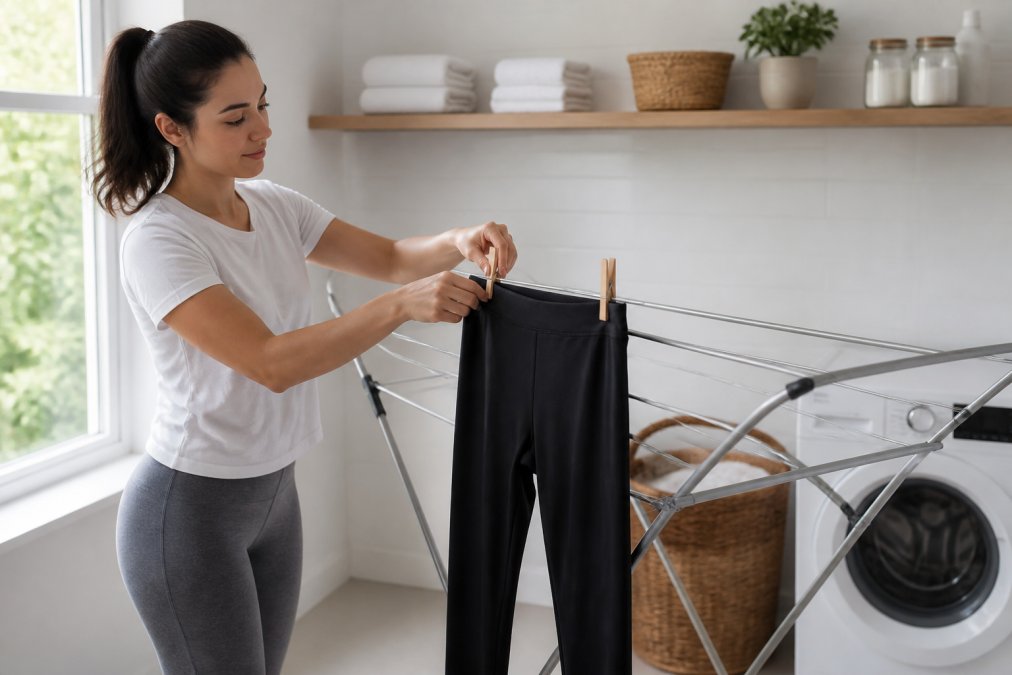
Heat exposure extends beyond the dryer. Leaving leggings in a hot car, near a heater, or under direct sunlight for extended periods causes the same fiber degradation. Skin temperature rises during wear, but the fabric is designed to manage that. External heat sources push the synthetic fibers past their tolerance.
If you must use a dryer for other items, keep your compression wear separate. A quick hang-dry typically takes 12 to 24 hours, and the wait protects your garment longevity for years of consistent performance.
Signs Compression Leggings Are Worn Out
Even with perfect care, compression leggings have a lifespan. Knowing when to replace them prevents you from training in gear that no longer supports your muscles or circulation.
Watch for these clear indicators that your leggings are worn out:
- Loss of compression: the fabric feels loose and does not snap back after stretching.
- Waistband roll: the topband folds down during movement, even after washing.
- Sagging fabric: bagging at the knees, hips, or seat that does not recover.
- Visible thinning: the fabric feels sheer or paper-thin in high-friction areas.
- Persistent odor: the moisture-wicking treatment has broken down, allowing bacteria to cling.
A common mistake is confusing normal wear with damage. Seams that pucker or threads that pull are signs of structural failure, not just cosmetic issues. If the pressure profile feels uneven, the leggings are no longer providing the muscle recovery and blood flow benefits they should.
Storage and Rotation: Small Habits, Longer Lifespan
How you store your leggings between wears is just as important as how you wash them. Folding them properly prevents creases that weaken the fibers at stress points, and rotating multiple pairs gives the elastane time to recover its shape.
Most guides stop there. But the real science of storage is about creep, the slow, permanent deformation of elastane under sustained tension. When you hang leggings by the waistband, gravity pulls on the entire garment, and the elastic fibers at the waistband slowly stretch beyond their recovery point. This is not a myth; it is the same mechanical principle that causes a rubber band to stay stretched if you leave it wrapped around a thick object for weeks.
Follow these storage guidelines:
- Fold, never hang: Hanging stretches the waistband over time. If you must hang them, use clips at the ankle hem so the weight hangs from the bottom, not the waistband.
- Fold along the seams: Creases that fall across the middle of a panel create stress points where the fibers weaken and eventually tear. Folding along the existing seams distributes the fold line through the stitching, not the fabric.
- Store flat in a drawer: Keep them away from direct sunlight and heat sources. Ultraviolet light breaks down the polymer chains in elastane, and ambient heat accelerates that process.
- Avoid tight rolling: Some people roll leggings to save space, but rolling them tightly under tension can cause the same creep effect as hanging. If you roll, do it loosely.
- Keep them separate from rough fabrics: Denim, zippers, and Velcro cause pilling and snags. Give your leggings their own drawer or a dedicated compartment.
Garment rotation is the overlooked secret to longevity. Elastane needs 24 to 48 hours to relax back to its original structure after being stretched (peer-reviewed research). Wearing the same pair daily gives the fibers no recovery time, accelerating the loss of elasticity. The Women's High-Waist Cycling and Yoga Leggings are designed for high-waist stability, but even the best construction needs rest days to maintain its hold.
Heat exposure beyond the dryer is a gap most guides ignore entirely. Leaving leggings in a hot car, near a radiator, or under direct sunlight for extended periods causes the same fiber degradation as machine drying. The interior of a car can reach 60°C+ in summer, which is well above the temperature threshold where elastane begins to relax permanently (noaa.gov). Hot yoga and sauna sessions are another consideration: while your body heat during a workout is manageable, sitting in a sauna while wearing compression garments exposes the fibers to sustained external heat that accelerates breakdown. If you practice hot yoga, choose a pair specifically rated for that heat range and expect a shorter lifespan.
| Habit | What to Do | Why It Matters |
|---|---|---|
| Washing | Cold water, delicate cycle, gentle detergent | Prevents heat damage and chemical breakdown |
| Drying | Air dry flat, away from heat and sunlight | Preserves elastane tensile strength |
| Storage | Fold flat along seams, keep out of direct light | Avoids stretching, crease stress, and UV degradation |
| Rotation | Alternate between 2-3 pairs | Gives fibers 24-48 hours to recover their shape |
| Heat Exposure | Avoid hot cars, saunas, and direct sunlight | Prevents permanent relaxation of elastane bonds |
| Replacement | Swap out at first sign of sagging | Maintains proper compression and support |
Repair vs. replace is a real decision point. Minor seam repairs are worth doing if the compression panels are intact. But if the fabric itself has lost its elasticity, no repair will bring back the squeeze. A simple test: stretch the fabric at the knee or hip panel. If it does not snap back within a few seconds, the elastane is permanently fatigued. Investing in quality pieces, like the Seamless Knitted Peach Hip Yoga Pants with knitted contouring that holds its shape, is the most effective way to extend the time between replacements.

Conclusion: Keep the Compression Working for You
Maintaining compression leggings comes down to respecting the synthetic fibers that do the heavy lifting. Cold washes, air drying, proper storage, and rotation are small habits that dramatically extend garment longevity. When your leggings finally show signs of wear, replacing them protects your performance and comfort. SheRoar by Black Lion designs compression leggings with high-hip compressive fits and breathable four-way stretch that hold through dynamic movement, so your gear works as hard as you do. Explore the collection and see the latest activewear styles that transition from intense workouts to everyday life.
Frequently Asked Questions
How often should I wash my compression leggings to maintain elasticity?
Wash your compression leggings after every wear, especially if you sweat heavily. This removes body oils and salts that break down elastane fibers over time. For lighter wear, like a short yoga session, you can rinse them in cold water and hang to dry. Frequent, proper washing protects elasticity more than letting them sit dirty. Use a gentle detergent and skip the dryer entirely.
How tight should compression leggings be for daily wear?
Compression leggings should feel snug but not painful. You should not need to tug at the waistband constantly, and the fabric should not dig into your skin or leave deep marks. You should be able to slide two fingers between the waistband and your stomach. If you experience numbness, tingling, or restricted breathing, the fit is too tight.
What are the first signs compression leggings are worn out?
The first signs compression leggings are worn out include a waistband that rolls down or sags, fabric that feels thinner or baggy in the knees and hips, and a loss of that initial supportive squeeze. You may also see small holes, frayed seams, or a permanent stretched-out shape after washing. When the fabric no longer springs back, it is time to replace them.
Can fabric softener ruin the elasticity in my leggings?
Yes, fabric softener is one of the fastest ways to destroy elasticity in compression leggings. It coats the synthetic fibers, like elastane and spandex, with a waxy film. This film interferes with the fibers' ability to stretch and snap back. It also leaves detergent residue that traps odor. Always use a mild liquid detergent without fabric softeners.