Is Premium Activewear Worth the Price? A 2026 Reality Check

Table of Contents
- The Real Cost of Cheap Gym Clothes
- Activewear Fabric Technology Explained: Why Material Matters
- The Benefits of High-Quality Workout Clothes You Can Actually Feel
- Is Premium Activewear Worth the Price? The Cost-Per-Wear Formula
- Where Premium Activewear Hits Diminishing Returns
- SheRoar by Black Lion Quality Review: Premium Without the Hype
- How to Make Your Activewear Last Longer
- The Verdict: What to Buy and What to Skip
- Frequently Asked Questions
Last Updated: September 8, 2026
The Real Cost of Cheap Gym Clothes
That $25 legging pair from a big box store feels like a win at checkout. Six months later, you're pulling them up mid-squat while the fabric pills and the color has faded. The real question is what each wear actually costs you in frustration, constant replacement, and eroded confidence in your gym gear.
Many shoppers face this dilemma when asking whether is premium activewear worth the price for their fitness routine. Many shoppers face this dilemma when asking whether is premium activewear worth the price for their fitness routine. The short version: premium activewear frequently delivers better value per wear than budget alternatives, but only when you understand what you're paying for. The short version: premium activewear frequently delivers better value per wear than budget alternatives, but only when you understand what you're paying for.
The hidden expense of cheap gym clothes isn't the price tag. It's the replacement cycle, the discomfort during workouts, and the fact that low-quality garments often end up in landfills within a year.
Activewear Fabric Technology Explained: Why Material Matters
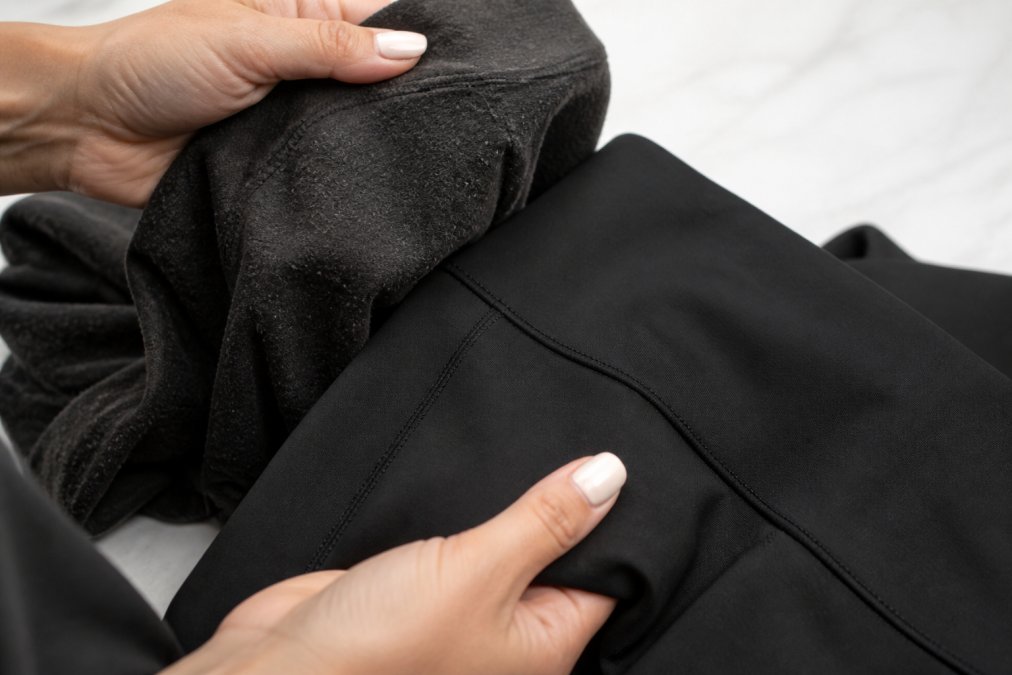
Fabric technology is the single biggest difference between a $25 legging and a $60 one. Look past marketing terms like "buttery soft" or "squat-proof" and examine the textile engineering: the specifics of the blend, the denier of the yarn, and the knit structure.
The Synthetic Blend Breakdown: Nylon vs. Polyester
Quality activewear is almost exclusively built on two synthetic workhorses, each with distinct trade-offs:
- Nylon (Polyamide): The gold standard for leggings and compression wear. It offers superior abrasion resistance, higher elasticity recovery, and a softer hand-feel than polyester. The catch? It's more expensive and absorbs slightly more water, so it can take marginally longer to dry.
- Polyester: The champion of moisture management. It is inherently hydrophobic, repelling water and pushing sweat to the surface for rapid evaporation. It is cheaper and holds color well, but lower-quality polyester knits can feel rougher and pill more than high-quality nylon.
The Critical Ratio: Elastane and Denier
The magic isn't just in the fiber type; it's in the ratio and the yarn thickness.
- Elastane (Spandex/Lycra) Ratio: A quality legging typically contains 10-20% elastane, providing the "snap-back" and four-way stretch (peer-reviewed research). Under 10%, the garment bags out at the knees and loses compression. Over 25%, it feels like a compression sausage casing and may not wick moisture effectively.
- Denier (Fiber Thickness): A measure of yarn thickness. A higher denier (70-80) means a thicker, more durable, more opaque yarn. Budget leggings often use a lower denier (40-50) to save on material costs, resulting in sheerness when stretched and a shorter lifespan. Premium leggings use higher-denier nylon for opacity and durability without double-layering.
Knit Structure: The Secret to Squat-Proofing
The way the yarn is knitted together is just as important as the fiber itself. Two primary constructions dominate:
- Circular Knit: A tubular knit cut and sewn into a garment. Cheaper to produce but less compressive, with a more "panty-like" fit.
- Warp Knit (e.g., Tricot or Raschel): A flat knit engineered to be run-resistant with a more stable, compressive structure. Most high-performance leggings use warp knit because it allows targeted compression zones and prevents laddering if snagged.
Why Cotton Fails
Cotton is a hydrophilic fiber, it absorbs moisture and holds it against your skin (peer-reviewed research). When wet, it loses structural integrity, stretches out, and becomes heavy, leading to chafing and a cold, clammy feeling. While some blends use a small percentage of cotton for low-sweat activities like yoga, it has no place in a high-performance training garment.
The SheRoar by Black Lion Standard
Our approach to fabric selection is based on this objective engineering. The High-Impact Wire-Free Sports Bra utilizes an 87% nylon and 13% spandex blend. The high nylon content provides the durable, soft hand-feel and abrasion resistance needed for high-friction movements, while the 13% spandex delivers the compression and recovery for support. The Two-Tone Tummy Control Yoga Leggings use a dense polyester knit engineered for opacity and shape retention, ensuring the fabric doesn't become sheer during deep stretches. Understanding these mechanics lets you look at a garment's tag and make an informed decision, rather than relying on a brand's marketing narrative.


The Benefits of High-Quality Workout Clothes You Can Actually Feel
The benefits of high-quality workout clothes extend far beyond looking good in the gym mirror. Compression fit in quality leggings and sports bras provides muscle support that reduces vibration during running or HIIT, which many athletes report helps with perceived fatigue. A well-constructed high-impact bra with proper encapsulation can make the difference between a focused session and one spent constantly adjusting.
Beyond performance, there's the psychological component. Consumer psychology research consistently shows that what you wear affects how you perform and how confident you feel (apa.org). When your waistband stays put and your bra doesn't dig into your ribs, you stop thinking about your clothes and start thinking about your workout. That mental shift matters, especially for women beginning their fitness journey.
Garment longevity is another measurable benefit. Quality activewear maintains its compression, opacity, and color through dozens of washes, while budget pieces often show signs of pilling and elasticity loss within months. The value proposition becomes clearer when you calculate how many wears you actually get from each piece.
Is Premium Activewear Worth the Price? The Cost-Per-Wear Formula
The most honest way to evaluate whether premium activewear is worth the price is the cost-per-wear formula. Divide the purchase price by the number of times you realistically wear the garment. A $60 legging worn twice weekly for two years costs about $0.58 per wear. A $25 legging that loses its shape after four months costs roughly $0.78 per wear, before factoring in the frustration of constant adjustment.
Here's how the math breaks down in practice:
| Garment | Price | Lifespan | Wears per Month | Cost per Wear |
|---|---|---|---|---|
| Budget leggings | $25 | 4-6 months | 8 | ~$0.52-$0.78 |
| Mid-range leggings | $45 | 12-18 months | 8 | ~$0.21-$0.47 |
| Premium leggings | $60+ | 24+ months | 8 | ~$0.31 or less |
The cost-per-wear analysis reveals that mid-range and premium pieces often deliver better long-term value, especially for consistent trainers. The key variable is garment longevity, which depends heavily on fabric quality and construction.
This framework helps answer whether is premium activewear worth the price for your situation. If you train three times weekly, investing in quality pieces makes financial sense. If you exercise sporadically, a smaller wardrobe of mid-range pieces might serve you better.
Where Premium Activewear Hits Diminishing Returns
Premium activewear hits diminishing returns around the $80-100 price point for leggings and $60-70 for sports bras. Beyond that, you're paying for brand equity, marketing, and status signaling rather than measurable performance improvements. The fabric technology that justifies moving from budget to premium is largely present in the $50-80 range.
The competitive landscape is packed with brands charging $100+ for leggings that use the same nylon-elastane blends found in $60 options. What you're buying at that price is often the logo, not superior textile engineering. For most women, the sweet spot sits in the mid-premium range.
That said, there are exceptions. High-impact sports bras for women with larger cup sizes genuinely require more engineering, more fabric, and more rigorous testing. A well-designed bra for a 32G chest legitimately costs more to produce than a basic compression crop top.
SheRoar by Black Lion Quality Review: Premium Without the Hype
SheRoar by Black Lion sits in that value sweet spot, delivering legitimate fabric technology without the inflated brand markup. The High-Impact Wire-Free Sports Bra at $59.95 uses an 87% nylon, 13% spandex blend providing four-way stretch, moisture-wicking performance, and quick-dry capability. The wire-free construction with built-in removable pads offers support for A through F cups, addressing a genuine gap for larger-chested women who want support without underwire discomfort.
The Two-Tone Tummy Control Yoga Leggings at $44.95 deliver the high-waist support and compression that prevents the dreaded mid-workout sag. The knit polyester fabric stretches in every direction and snaps back without losing shape, while the elastic waistband sits flat without rolling or digging in. At this price point, the cost-per-wear math works strongly in your favor.
What distinguishes the SheRoar approach is gym-to-street versatility. The sports bras double as crop tops, the leggings transition from studio to errands, and new styles arrive weekly. For women questioning whether is premium activewear worth the price when they could grab cheaper basics, the answer lies in construction details like seamless knits that eliminate chafing and crossover waistbands that stay put.
How to Make Your Activewear Last Longer
Proper garment care dramatically extends the lifespan of any activewear, but the standard advice, "wash cold, air dry", only scratches the surface. To truly protect your investment, you need to understand the mechanics of fabric degradation.
The Three Killers: Heat, Friction, and Chemistry
Fabric breakdown follows predictable patterns driven by three main factors:
- Heat (Thermal Degradation): The elastane fibers (spandex) that give your leggings their stretch are polyurethane-based. High heat, from a hot water wash or a high-heat dryer cycle, causes these polymer chains to break down and become brittle. This is why a legging that goes through a hot dryer loses its "snap" and bags out at the knees after just a few cycles. The mechanical stress of tumbling in a hot dryer also weakens the nylon or polyester yarns, leading to fiber breakage and pilling.
- Friction (Mechanical Abrasion): Pilling is not a defect; it's a symptom of friction. During a wash cycle, garments rub against each other and the drum of the machine, causing loose fibers on the surface of the knit to tangle into tiny balls (pills). The tighter the knit and the higher the quality of the yarn, the less loose fiber there is to pill. Washing activewear with heavy items like denim or towels accelerates this process exponentially.
- Chemical Attack (Detergent and Chlorine): Standard detergents contain enzymes and optical brighteners designed for cotton and everyday stains. These chemicals can be harsh on synthetic fibers, stripping away the hydrophobic (water-repelling) finish that aids in moisture-wicking. Fabric softener is the worst offender, it coats synthetic fibers with a waxy residue that clogs the pores and destroys breathability. Chlorine bleach is catastrophic, causing immediate yellowing and fiber degradation in nylon.
The 50-Wash Test: What We Observed
The Optimized Care Protocol
Based on our testing, here is the definitive protocol to maximize the lifespan of your activewear:
- Wash in Cold Water (Below 30°C/86°F): Prevents thermal degradation of elastane and color bleeding.
- Use a Sport-Specific Detergent: Formulated without enzymes, brighteners, or softeners that attack synthetic fibers. Look for a pH-neutral formula.
- Turn Garments Inside Out: Protects the outer surface from friction against other clothes, reducing the primary cause of pilling.
- Zip Up and Fasten Hooks: Prevents snags and tears from zippers and hooks on other garments.
- Line Dry, Never Machine Dry: The mechanical tumbling and heat of a dryer are the most destructive forces your activewear will face. Hang garments to dry away from direct sunlight to prevent UV fading.
- Wash After Every Wear: Non-negotiable. Sweat contains salts and oils that, if left to dry, can break down the fibers and harbor odor-causing bacteria that are difficult to remove later.
The Rotation Rule
Even with perfect care, elastane fibers experience fatigue. Wearing the same pair of leggings two days in a row doesn't give the fibers time to recover their shape. A rotation of at least two or three quality pieces allows each garment to rest between wears, extending its lifespan by up to 50%. This is a critical, often-overlooked factor in the cost-per-wear equation.
The Verdict: What to Buy and What to Skip
The verdict on whether is premium activewear worth the price comes down to how often you train and which pieces you prioritize. Invest in high-impact sports bras and leggings you'll wear multiple times weekly. Skip premium versions of basic tees, socks, and accessories where the performance difference is minimal.
For most women, the smart strategy is building a capsule wardrobe of quality essentials rather than accumulating cheap pieces that need constant replacement. A few well-chosen premium items outperform a drawer full of budget activewear in both performance and cost-per-wear. Durable garments that last years also reduce the waste generated by fast fashion activewear.
SheRoar by Black Lion offers that balance of quality and value, with pieces designed to move from intense workouts to daily life without missing a beat. The Crossover Flared Legging at $44.95 and the Halter Neck Yoga Sports Bra provide the seamless comfort and support that keeps you focused on your workout rather than your wardrobe.

Choosing activewear shouldn't require a finance degree or a fabric engineering background. The real answer to whether is premium activewear worth the price is yes, when you buy smart: focus on fabric technology, calculate cost-per-wear, and invest in pieces that genuinely support your movement. SheRoar by Black Lion delivers that quality with styles designed for both workouts and daily life. Explore the collection and find activewear that fits the woman you're becoming.
Frequently Asked Questions
Is expensive activewear actually better quality?
Yes, but only up to a point. At a certain price, the fabric technology and construction genuinely improve. You get better moisture-wicking, four-way stretch, and seam construction that survives repeated washing. However, past that threshold, you are paying for brand equity and status signaling rather than a better garment. The trick is to look for the technical specs, like nylon-spandex blends and compression fits, rather than just the label.
What is a reasonable cost-per-wear for premium activewear?
A good target is under $1.50 per wear. If you buy a $60 sports bra and wear it twice a week for a year, that is about $0.58 per wear, which is excellent value. The same bra worn once a month costs $5 per wear, which is harder to justify. The cost-per-wear formula helps you decide if a piece is an investment piece or an impulse buy.
How long should premium leggings last before they lose their shape?
A well-made pair of leggings with a high elastane content should maintain their compression and shape for 12 to 18 months with regular wear and proper care. The key is elasticity retention, which depends on the fabric blend and how you wash them. Cold water and air drying will extend their life significantly. When the waistband rolls or the knees bag out permanently, the garment has reached the end of its useful life.
What are the signs of low-quality gym wear to avoid?
Watch for pilling after the first few washes, seams that twist or fray, and fabric that becomes see-through when you squat. Low-quality gym wear often uses cheaper synthetic fibers that hold odors and lose their stretch quickly. If the waistband rolls down during a workout or the bra pads shift constantly, the construction is likely subpar. These signs mean you will be replacing the item soon, making it the most expensive option in the long run.