Is Compression Activewear Actually Good for Plus Size?

Table of Contents
- Is Compression Activewear Actually Good for Plus Size? The Honest Answer
- Compression Activewear vs Regular Plus-Size Activewear
- What Compression Actually Does for Your Body During Exercise
- Compression Leggings Fit Guide: How to Judge Support Without Squeeze
- Compression Leggings for Running: What Plus-Size Runners Should Prioritize
- Compression Leggings Too Tight? Warning Signs and Fixes
- Medical Compression Garments vs Activewear: Why the Difference Matters
- The Verdict: Who Should Wear Plus-Size Compression Activewear?
- Frequently Asked Questions
Last Updated: October 20, 2026
Is Compression Activewear Actually Good for Plus Size? The Honest Answer
Yes, with caveats. Compression activewear can be genuinely good for plus-size bodies, but not for the reasons marketing suggests.
Fit matters far more than the compression label. A well-cut pair in your size will outperform a "maximum compression" pair that fights your body.
Below, we break down what compression actually does, how to judge fit without squeezing yourself into the wrong size, and when to walk away.
Compression Activewear vs Regular Plus-Size Activewear
The core difference is how the fabric behaves under load. Regular plus-size activewear prioritizes stretch and softness. Compression activewear uses a denser knit to hold the leg and reduce bounce.
That trade-off cuts both ways. Denser fabric stays opaque and resists bagging at the knee, but traps more heat and takes longer to pull on. For all-day softness over workout support, a lighter legging usually wins.
| Feature | Compression Activewear | Regular Plus-Size Activewear |
|---|---|---|
| Fabric weight | Denser knit, more structure | Lighter, softer hand-feel |
| Movement control | Holds the leg, less bounce | More give, more shift |
| Opacity at plus sizes | Generally better | Varies widely |
| Heat retention | Higher | Lower |
| Best use | Running, HIIT, high-impact | Yoga, walking, lounging |
| Getting it on | Firmer, slower | Quick and easy |
What Compression Actually Does for Your Body During Exercise
Compression reduces soft-tissue movement, that is the whole mechanism. Less jiggle means less inner-thigh chafing and fabric drag, which is why runners and HIIT regulars like it. A secondary effect is proprioception: the firm feel can make you more aware of leg position, which some lifters find helpful for form.
What compression does not do is burn fat, reshape your body, or replace a supportive sports bra.
What the evidence supports, and what it doesn't
The evidence on whether compression improves performance or recovery is mixed and modest. Some studies suggest small gains in perceived recovery and reduced soreness; others find no meaningful performance difference.
Separate workout compression from medical compression: medical garments are fitted to a measured pressure standard for clinical reasons; activewear is not. If you have a diagnosed circulation or lymphatic condition, follow your clinician's guidance, not a legging label.
Compression levels and garment pressure, explained
Compression activewear isn't rated like medical garments, but pressure still varies meaningfully. Most plus-size compression leggings fall into three practical bands:

| Level | How it feels | Typical construction | Best for |
|---|---|---|---|
| Light / everyday | Gentle hug, easy to pull on | Thinner knit, often 4-way stretch, minimal paneling | Yoga, walking, lounging, all-day wear |
| Moderate | Firm hand on the leg, noticeable support | Denser knit, wide contoured waistband, flatlock seams | Running, HIIT, lifting, cycling |
| High | Strong hold, slower to put on | Heavy knit, structured panels, sometimes a compressive inner layer | Short high-impact sessions, recovery wear for some athletes |
A few construction details tell you more about real-world pressure than any label:
- Fabric weight. Heavier knits (often described in gsm) tend to hold more shape and apply more pressure. A 220gsm knit feels firmer than a 160gsm knit, though fit still matters more than the number.
- Elastane content. More spandex generally means more stretch and recovery, which helps the garment hold its shape without feeling stiff. A common range is 10-20% spandex in compression leggings.
- Paneling and seams. Flatlock or bonded seams reduce chafing; structured panels can add targeted support at the waist or thigh.
How to choose a level
Match the level to the activity, not to a desire to look smaller. Runners and HIIT regulars usually land on moderate; yoga, walking and all-day wear suit light compression.
If a garment feels restrictive rather than supportive, it is not doing its job, whatever the label claims. For general guidance on what compression garments are and how pressure is described, the Cleveland Clinic overview of compression garments is a useful starting point.
Compression Leggings Fit Guide: How to Judge Support Without Squeeze
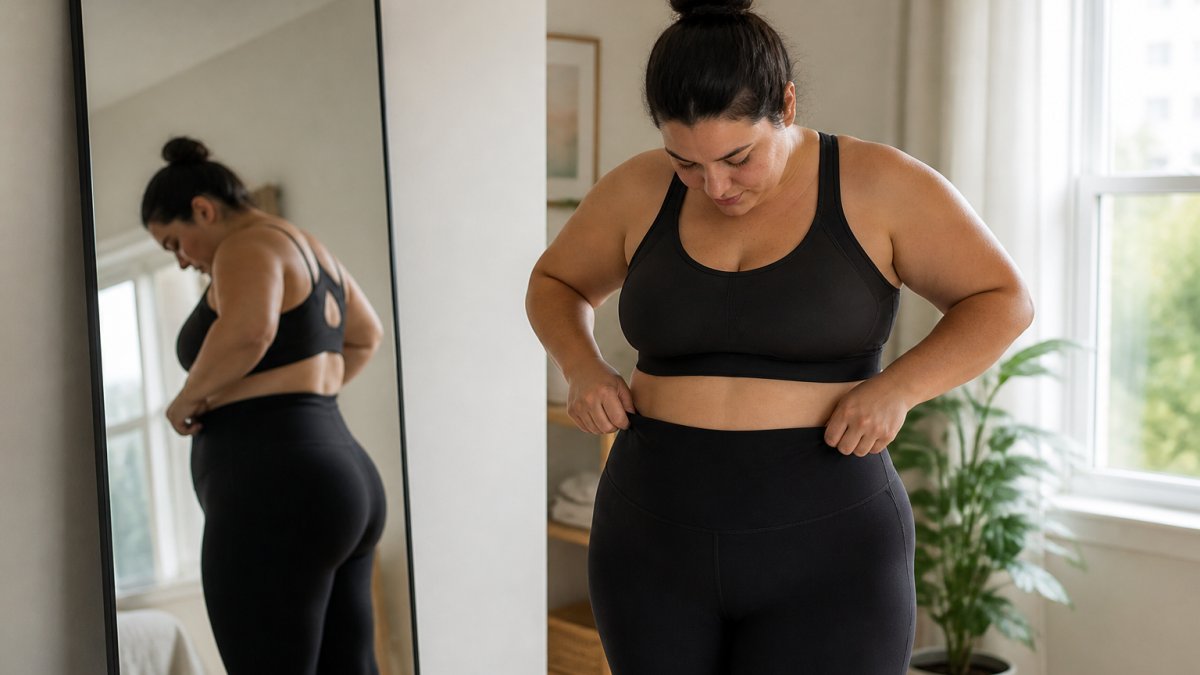
Good compression should feel like a firm hand on the leg, not a clamp. "Firm" isn't universal, it depends on where you carry weight, your inseam, and your activity.
Fit by body zone
Waist and midsection. A high-rise band should sit at or just above the natural waist and stay flat when you bend.
Thighs. This is where plus-size fit most often fails. The fabric should hug without a tourniquet effect.
Calves and ankles. For full-length leggings, check the calf isn't compressed more than the thigh.
Knees. Bend to a lunge and watch the fabric behind the knee.
Fit by movement
Run this check in the fitting room or at home before cutting tags:
- Sit test: Sit on a chair for two minutes. The waistband should not dig into your stomach or roll. Stand up, the band should return to flat without you adjusting it.
- Bend test: Fold forward and touch your shins. Check for sheerness at the hip and whether the back waistband gaps away from your body.
- Squat test: Do three full squats. Watch for sheerness at the hip in the mirror and for the waistband sliding down.
- Knee-lift test: Stand and lift one knee to hip height. The fabric should not pull hard at the crotch or bunch behind the knee.
The sizing-down trap
Sizing down to get "more compression" is backwards. It produces restriction, not support, and is the fastest route to waistband roll-down, seam strain and chafing. Compression comes from the knit and cut, not a smaller tag. Between sizes?
Our High-Waist Compression Leggings with Pockets use a 220gsm nylon-spandex knit with a high-waist elastic band designed to sit flat without rolling.
Women's High-Waist Plus Size Sports Running Tights →
Compression Leggings for Running: What Plus-Size Runners Should Prioritize
For running, prioritize waistband security, opacity and seam placement, in that order. Compression level comes fourth.
A waistband that stays put matters more than any pressure rating, every mid-run readjustment breaks your stride and focus.
Our Women's High-Waist Plus Size Sports Running Tights were built around those priorities: a 90% nylon, 10% spandex knit chosen to hold opacity at plus sizes, a wide tummy-control band, and compression support described as holding the leg without cutting off circulation.

If you prefer a seamless feel for longer distances, [the Ultra-High-Waist Seamless Fitness Leggings remove seams entirely](/products/ultra-high-waist-yoga-pants-seamless-fitness-leggings) and come in sizes S to 5XL, with a 4-way stretch and moisture-wicking fabric.

Compression Leggings Too Tight? Warning Signs and Fixes
Compression leggings are too tight when they restrict breathing, leave deep marks after removal, cause numbness or tingling, or take more than a minute to wrestle over the hip. Any of those means the size or cut is wrong for you.
The fixes are simple, in order:
- Size up first. Most "too tight" complaints are sizing complaints, especially with brands that run small.
- Change the rise. A wider, higher band distributes pressure better than a narrow one.
- Try a seamless cut. Seamless knits stretch more evenly than paneled construction.
- Drop the compression level. Moderate compression suits most everyday workouts.
- Return them. If a garment fails the breath test, it is not your job to break it in.
A legging you have to peel off isn't a performance garment, it's one you'll stop wearing by week three.
Medical Compression Garments vs Activewear: Why the Difference Matters
Medical compression garments and compression activewear are not the same product, and confusing them is the costliest mistake in this category.
Medical compression garments are regulated products, often rated in mmHg, prescribed or fitted for specific clinical reasons.
Compression activewear is apparel. The FDA guidance on compression garments and medical device classification explains how the regulatory line is drawn.
If you have a diagnosed condition or a clinician has recommended compression, follow their guidance and get fitted properly.
| Medical Compression Garment | Compression Activewear | |
|---|---|---|
| Purpose | Clinical management | Movement support |
| Fit | Measured and fitted | Sized off a chart |
| Pressure | Specified in mmHg | Not rated |
| Regulated as | Medical device in many markets | Apparel |
| Buy from | Clinical fitter | Retailer |
The Verdict: Who Should Wear Plus-Size Compression Activewear?
Compression activewear is worth it if you run, do HIIT, lift, or train in any way that makes fabric move, or if waistband slippage and inner-thigh chafing have pushed you away from leggings entirely.
Skip it if you want soft all-day comfort, are shopping for a medical need, or have been sizing down to chase "more compression." None of those end well.
The rule we would give any friend: buy the size that passes the five-point fit check, and let the fabric do the work. Our Women's High-Seamless High Waist Quick-Dry Sports Yoga Pants suit lower-impact sessions, and the full SheRoar by Black Lion catalog covers everything from running tights to everyday shapewear.
Frequently Asked Questions
Is compression activewear comfortable for plus-size bodies?
It can be, but comfort depends on the compression level and the fit. Moderate compression that sits flat at the waistband and stretches through the hip usually feels supportive rather than restrictive. The problems start when the garment is sized down or the band digs in. Look for a wide, flat high-rise waistband, four-way stretch, and fabric that stays opaque without pulling. SheRoar's High-Waist Compression Leggings with Pockets use a 220gsm nylon-spandex knit that compresses without restricting, and the brand notes the style runs true to size.
How should compression leggings fit?
They should feel firm and supportive, not painful. The waistband stays flat when you squat, the fabric moves with you without pulling at the knee or hip, and you can breathe and bend without readjusting. You should not need to peel them off at the end of a workout, and they should not leave deep marks that last hours. If you are between sizes, check the brand's size note: some SheRoar styles run one size smaller than US sizing, so sizing up gives a truer fit.
Can compression leggings be too tight?
Yes. Signs include numbness or tingling in the legs or feet, deep red marks that linger, restricted breathing, and a waistband that rolls or digs. Compression that is too tight does not work better; it just makes movement harder and can cut circulation. If a pair feels restrictive before you start moving, size up. SheRoar's Women's High-Hip Elastic Tight Breathable Sports Pants are cut as a compression fit, and the brand suggests sizing up if you want a more relaxed feel.
Are compression leggings good for running?
For many plus-size runners, yes, when the fit is right. Compression leggings for running should hold the leg without cutting circulation, stay opaque at the hip through a full stride, and keep the waistband in place. SheRoar's Women's High-Waist Plus Size Sports Running Tights are built with 90% nylon and 10% spandex for opacity at plus sizes, plus a high-waist tummy control band designed to stay flat during sustained movement. If you feel restricted or the seams pull, go up a size.
Is compression clothing the same as medical compression wear?
No. Medical compression garments are regulated products with measured pressure, often prescribed for conditions like lymphedema or lipedema. Activewear compression is not a medical device and is not a substitute for one. If you have a medical condition or have been prescribed compression, follow your clinician's guidance rather than buying workout leggings. Compression activewear can still offer everyday support and a smooth silhouette, but it is designed for movement and comfort, not treatment.
The hard part is not finding compression activewear. It is finding a pair that fits your body as it is, without asking you to size down or compromise on opacity. That is the problem SheRoar by Black Lion set out to solve, with plus-size running tights built around a wide, non-rolling tummy-control band, a nylon-spandex knit that holds its structure, and a size range that runs to 5XL on our seamless styles. Get started with SheRoar by Black Lion and dress the woman you are becoming.